Wednesday, October 19, 2016

The Twilight Zone Vortex 2016 Halloween Countdown #13: "Long Distance Call"

The Twilight Zone excelled in telling tales of terror, exploring the darkest aspects of human existence in myriad ways. To celebrate the Halloween season, we’re counting down the 31 most frightening and unsettling moments from The Twilight Zone, one for each day of October. We’ll be revisiting some of the episodes we’ve already covered and looking ahead to episodes from the final three seasons of the series. -JP


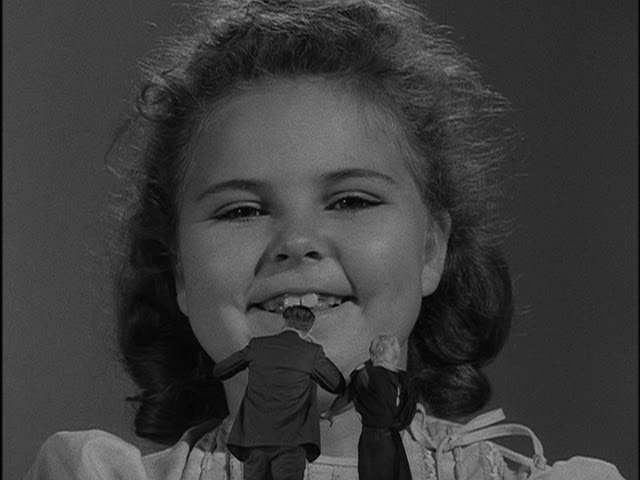
13. Grandma’s Calling, from “Long Distance Call,” season two, episode 58
Written by Charles Beaumont and William Idelson, directed by James Sheldon, starring Philip Abbott, Patricia Smith, Lili Darvas, Bill Mumy

“Long Distance Call” is high in the running as the most unsettling episode of the entire series. The idea of a toy telephone as a conduit for a loving grandmother to call her young grandson from beyond the grave and attempt to coerce the child to kill himself so that they may be reunited in the afterlife is both heartbreakingly sad and undeniably disturbing. The series rarely ventured into such emotionally jarring content. The overall effect is a suspenseful and almost unbearably tense episode which seems to benefit from the otherwise unappealing videotape format, which lends a disquieting and intimate feeling to the proceedings, giving the viewer an uncomfortable fly-on-the-wall perspective to a family tragedy. The scenes in which the young boy speaks to the dead grandmother through the toy telephone remain some of the creepiest moments from the series. The episode is not unrelentingly bleak, however, and the ending manages to resolve the horrible plight of the family without relieving the carefully built tension. Strong performances abound in this one, particularly from Lil Darvas, as the grandmother, and Philip Abbott as the desperate father. The episode also marks the first of three appearances from young actor Bill Mumy, who soon makes an unforgettable appearance on the series that earns a high spot on this countdown.

Trivia:

-Charles Beaumont and William Idelson were on-set during the filming the episode and were asked to write a new version of the father’s monologue at the end of the episode. In the original version, the father begs for the life of his son by bringing up his own relationship to his mother. After trying the scene and finding it flat, the production crew felt it would work much better if the father concentrated on the young boy’s relationship to the grandmother, focusing on how little of life the boy would be allowed if he were to die so young. Beaumont and Idelson obliged and rewrote the scene on-set.

Read our full coverage of “Long Distance Call” here. 

Tuesday, October 18, 2016

The Twilight Zone Vortex 2016 Halloween Countdown #14: "The New Exhibit"

The Twilight Zone excelled in telling tales of terror, exploring the darkest aspects of human existence in myriad ways. To celebrate the Halloween season, we’re counting down the 31 most frightening and unsettling moments from The Twilight Zone, one for each day of October. We’ll be revisiting some of the episodes we’ve already covered and looking ahead to episodes from the final three seasons of the series. -JP


#14 - Nightmares in Wax, from “The New Exhibit,” season four, episode 115
Written by Jerry Sohl (credited to Charles Beaumont), directed by John Brahm, starring Martin Balsam

“The New Exhibit” is another grim offering on the series that walks the tightrope between supernatural and psychological horror. The story is cloaked in just enough ambiguity to conceal the true nature of the narrative and works equally well as a story of murderous wax figures imbued with life or as a story of a man in the middle of a homicidal breakdown unable to accept his horrid deeds. Horror stories revolving around wax effigies, particularly the effigies of famous murderers, was a well-worn theme by the time the series approached the material for an hour-long episode of the fourth season (see A.M. Burrage’s oft-adapted 1931 story “The Waxwork,” and the silent film Waxworks (1924)). There are some motifs of the horror story, ventriloquist dummies being another example, which are both enduring and versatile. “The New Exhibit” is one of the most evenly paced offerings from a generally uneven fourth season and consistent director John Brahm handles the proceedings effectively and without distracting flourishes. Brahm’s use of a perspective framing shot for the climactic moment in which the wax figures slowly come alive and move off their pedestals is brilliantly staged, giving the sequence the feeling of a picture coming horribly to life. Though some commentators have suggested “The New Exhibit” would be more appropriate for a series such as The Alfred Hitchcock Hour or Thriller (series which frequently presented stories of supernatural suspense), this notion flies in the face of the fact that The Twilight Zone frequently traveled along the paths of the horror story. One could argue that more horror stories were presented on the series than were science fiction stories, considering that the series rarely concerned itself with scientific inquiry and typically used the fantasy construct inherent in the science fiction story for its own purposes. One need only look to episodes such as “The Hitch-Hiker,” “The Howling Man,” “The Dummy,” or “The Masks” (or any others on this countdown) to see that the series was equally adept at the tale of supernatural terror as with any other type of tale, and perhaps more so.

Trivia:

-“The New Exhibit” is the first of three episodes of the series which were ghost-written by science fiction author Jerry Sohl and presented as the work of regular series writer Charles Beaumont. Beaumont became very ill from an aggressive form of mental degeneration that has been attributed to everything from early onset Alzheimer’s to lead poisoning. Beaumont soon lost his ability to write but had acquired numerous writing assignments including work for The Twilight Zone. In an effort to honor his commitments and continue to provide for his family, Beaumont entered into an agreement with his friend Jerry Sohl in which Sohl would provide scripts for The Twilight Zone under Beaumont’s name for fifty percent of the payment. Sohl, himself an accomplished writer for television, agreed to this arrangement largely because the Beaumont household had begun to struggle financially under the burden of Beaumont’s debilitating illness. What remains unclear, even at this late a date, is what, if anything, Beaumont contributed to the three teleplays, which also included the fifth season episodes “Living Doll” and “Queen of the Nile,” this latter episode a virtual remake of Beaumont’s first season episode, “Long Live Walter Jameson.” 

Monday, October 17, 2016

The Twilight Zone Vortex 2016 Halloween Countdown #15: "Twenty Two"

The Twilight Zone excelled in telling tales of terror, exploring the darkest aspects of human existence in myriad ways. To celebrate the Halloween season, we’re counting down the 31 most frightening and unsettling moments from The Twilight Zone, one for each day of October. We’ll be revisiting some of the episodes we’ve already covered and looking ahead to episodes from the final three seasons of the series. -JP


15. Room for One More, from “Twenty Two,” season two, episode 53
Written by Rod Serling, directed by Jack Smight, starring Barbara Nichols, Fredd Wayne, Jonathan Harris

Rod Serling’s “Twenty Two” is an episode which relies on the haunting refrain “room for one more,” along with moments of striking visual imagery, to deliver a compact and haunting story of premonition. Like Serling’s other stories of pursued women on the verge of breakdowns, “Twenty Two” unfolds around a familiar motif, the recurring dream, to engage the viewer in piecing together clues to reveal a larger picture of the character’s plight. The most effective scenes in the episode are those within the dream, in which our protagonist finds herself in a cavernous lower floor of a hospital. There she arrives before the doors of the hospital’s morgue unit. The nurse that emerges from the doors to ominously intone “room for one more” is played to chilling perfection by Arline Sax (better known as Arlene Martel). Though “Twenty Two” is one of six episodes shot on videotape, a largely disastrous attempt to lower production costs, little of the format detracts from the episode's effectiveness. A unique twist on this familiar story type is that, in “Twenty Two,” the character survives through her ordeal relatively unscathed, unlike similar characters in “The After Hours” (reverted back to a mannequin), “The Hitch-Hiker” (recognition of death), or “Mirror Image” (committed to an insane asylum). “Twenty Two,” though widely familiar as a story by the time Serling adapted it for the series, still manages to provide the eerie thrills of a traditional ghost story.

Trivia:

-“Twenty Two” is credited as being based upon an anecdote in Bennett Cerf’s 1944 anthology Famous Ghost Stories (Modern Library). The true source is the 1906 short story “The Bus-Conductor” by E.F. Benson. Benson wrote numerous ghost stories, a handful of which are acknowledged classics. To cause further confusion, “The Bus-Conductor” is not included in the Cerf anthology. The Benson story which is included is the 1904 story “The Man Who Went Too Far.” “The Bus-Conductor” has been reprinted and adapted so often since its initial publication (it has appeared in virtually every fictional medium) that the source of the story often becomes lost on those adapting it. Benson’s story was adapted for the excellent 1945 horror anthology film Dead of Night, as well as included, sans credit, as a story in Alvin Schwartz’s popular 1981 collection of folktales, Scary Stories to Tell in the Dark.

Read our full coverage of “Twenty Two” here. 

Sunday, October 16, 2016

The Twilight Zone Vortex 2016 Halloween Countdown #16: "Mirror Image"

The Twilight Zone excelled in telling tales of terror, exploring the darkest aspects of human existence in myriad ways. To celebrate the Halloween season, we’re counting down the 31 most frightening and unsettling moments from The Twilight Zone, one for each day of October. We’ll be revisiting some of the episodes we’ve already covered and looking ahead to episodes from the final three seasons of the series. -JP


#16 - Double Trouble, from “Mirror Image,” season one, episode 21
Written by Rod Serling, directed by John Brahm, starring Vera Miles and Martin Milner

Rod Serling’s “Mirror Image” is an underrated gem of the first season that brings an atmosphere of Gothic horror to a modern tale of malevolent doppelgängers. The episode is anchored by fine performances from Vera Miles, as a supernaturally persecuted woman slowly losing her grip on reality, and Martin Milner, as a sympathetic but doubting fellow traveler who soon learns the horrible truth of the situation. The episode benefits from a single, isolated set, a favorite motif of Serling’s episodes and one which he utilized to great effect in a number of classics (“The After Hours,” “Five Characters in Search of an Exit,” “The Masks,” etc.). This serves to constrict the space around the characters and increase the intrinsic tension of the story. In a clever touch, Serling subtly insinuates the notion that stations of traveling exchange (train depots, airports, bus terminals) are areas in which the space between our world and a parallel dimension are thinnest, allowing for “others” to pass through. Director John Brahm combines steady framing shots with unnerving, and disorienting, perspective shots as the episode moves toward its harrowing conclusion. The image of a clearly malevolent Vera Miles glaring out from a bus window at her unfortunate counterpart is a highlight, but the strangely effective perspective shot of Martin Milner chasing after, and subsequently losing sight of, his grinning double is like a vision from a particularly vivid nightmare.

Trivia:

-During the first season, Rod Serling was fond of a story type in which a woman, always alone and particularly susceptible to mental breakdown, is pursued by a supernatural force eventually revealed to be an apparition contingent with the individual self. Along with “Mirror Image,” Serling also gave us the characteristically related episodes, “The Hitch-Hiker,” “Nightmare as a Child,” and “The After Hours” during the first season.

Read our full coverage of “Mirror Image” here.  

Saturday, October 15, 2016

The Twilight Zone Vortex 2016 Halloween Countdown #17: "The Jungle"

The Twilight Zone excelled in telling tales of terror, exploring the darkest aspects of human existence in myriad ways. To celebrate the Halloween season, we’re counting down the 31 most frightening and unsettling moments from The Twilight Zone, one for each day of October. We’ll be revisiting some of the episodes we’ve already covered and looking ahead to episodes from the final three seasons of the series. -JP


#17 - A Native Vengeance, from “The Jungle,” season three, episode 77
Written by Charles Beaumont, directed by William Claxton, starring John Dehner

Charles Beaumont’s “The Jungle” is a bleak and brooding horror story that examines the contrast between modern science and ancient superstition. The tale of jungle horror or native vengeance was already a familiar story concept at the time Beaumont wrote his story, dating back at least to the middle Victorian era. What sets “The Jungle” apart is the strong, deterministic performance of John Dehner, as the unfortunate Alan Richards, and the excellent use of sound and images to tell the story. Dehner presents Richards as a quietly proud man determined to ignore all evidence that he is being targeted and pursued by things he doesn’t understand. This take on character makes the climactic moment of realization and subsequent breakdown all the more powerful. Dehner singlehandedly carries the episode along and the most effective moments come when he is being pursued through an eerily empty New York City. An episode in a taxicab is a particularly unnerving moment. Director William Claxton rises to the challenge and brilliantly helms a particularly atmospheric episode. There is a subtle supernaturalism in the episode, as in so many of the series offerings, which straddles the line between a tale of supernatural horror and one of psychological horror. Not until the end is the difference made explicit. Of course, “The Jungle” is greatly remember for its grisly ending, which is flawlessly staged using a live adult male lion, who is captured in an impressive leap over the camera.

Trivia:

-Charles Beaumont’s original short story was first published in the December, 1954 issue of If: Worlds of Science Fiction. The story differs greatly from the finished episode. The original story took place in a far future in which the wealthy members of society are forced to destroy a large portion of an African jungle in order to build a contained, sustainable city structure. Beaumont was forced to abandon most of this story configuration due to the budget limitations on the show, as the construction of such a city structure proved unfeasible. The story benefited greatly from this forced change, as the original story is overly long and too preoccupied with building its fictional world. By eschewing the science fiction trappings and placing the story in a recognizable, modern setting, Beaumont is able to continue his series of episodes which examine the psychological effects of unreality on a determinedly rational man.

Read our full coverage of “The Jungle” here.

Friday, October 14, 2016

The Twilight Zone Vortex 2016 Halloween Countdown #18: "Stopover in a Quiet Town"

The Twilight Zone excelled in telling tales of terror, exploring the darkest aspects of human existence in myriad ways. To celebrate the Halloween season, we’re counting down the 31 most frightening and unsettling moments from The Twilight Zone, one for each day of October. We’ll be revisiting some of the episodes we’ve already covered and looking ahead to episodes from the final three seasons of the series. -JP


#18 - A Child’s Playthings, from “Stopover in a Quiet Town,” season five, episode 150
Written by Earl Hamner, Jr., directed by Ron Winston, starring Barry Nelson, Nancy Malone

Frequent contributing writer Earl Hamner, Jr. was a truly unique voice on the series and his idiosyncratic style shines through in many of his efforts for the show. Hamner arrived in the third season and displayed a skill in combining Southern folklore and rustic fantasy. Occasionally, however, Hamner’s stories fell more in line with the type of modernistic science fantasy typical of the series. Hamner’s fifth season episode, “Stopover in a Quiet Town,” is perhaps his strongest script and certainly his most fondly remembered episode by viewers of the show. This is primarily due to the outlandish, yet nightmarish, ending to the episode. “Stopover in a Quiet Town” concerns a drunken couple who awaken to find themselves trapped in what is essentially a doll’s house. And who are the dolls? And, a more frightening question, who is coming to play with the dolls? Haunted by the ephemeral, lilting voice of a young girl, the couple try in vain to escape their makeshift prison (for the exterior of the house proves as confining as the interior) only to discover the true horror of their situation in a brilliant, climactic reveal. Hamner uses elements of several previous episodes (including prominent use of “Where is Everybody?” and “Five Characters in Search of an Exit,”) to craft an atmospheric and engaging episode of supernatural persecution with an effective, and seemingly requisite, twist ending.

Trivia:

-The story of supernatural persecution was easily the most common story type on the series. Every regular series writer tried their hand at it and the results are a number of the show’s classic episodes, including “The After Hours,” “The Hitch-Hiker,” “The Invaders,” “Perchance to Dream,” “The Dummy,” “Mirror Image,” and “Person or Persons Unknown,” to name a few. Hamner previously attempted this type of story with the earlier fifth season episode, “You Drive.” This episode type is quite unlike the other story types common to the show, and shares more characteristics with mystery and horror fiction than with science fiction, the latter of which is a term often erroneous used to broadly characterize the series. Even as early as the latter portion of the first season, the writers of the show began to borrow from one another to create this type of episode and this allows for fascinating juxtapositions between these familiar but versatile stories. 

Thursday, October 13, 2016

The Twilight Zone Vortex 2016 Halloween Countdown #19: "And When the Sky Was Opened"

The Twilight Zone excelled in telling tales of terror, exploring the darkest aspects of human existence in myriad ways. To celebrate the Halloween season, we’re counting down the 31 most frightening and unsettling moments from The Twilight Zone, one for each day of October. We’ll be revisiting some of the episodes we’ve already covered and looking ahead to episodes from the final three seasons of the series. -JP


#19 - Vanished, from “And When the Sky Was Opened,” season one, episode 11
Written by Rod Serling, based on “Disappearing Act” by Richard Matheson, directed by Douglas Heyes, starring Rod Taylor, James Hutton, Charles Aidman

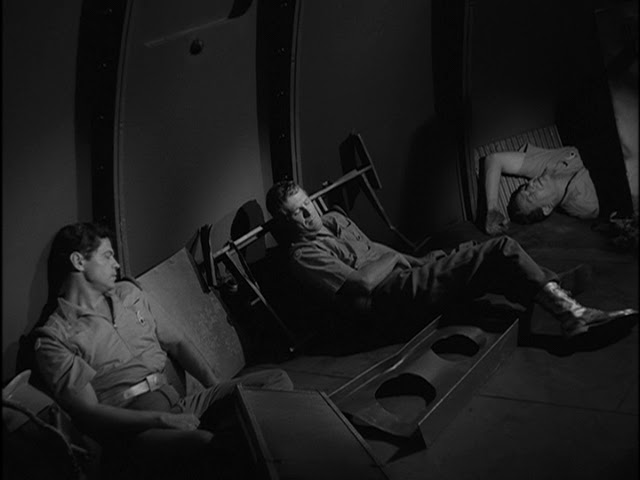
Rod Serling took Richard Matheson’s haunting short story “Disappearing Act” and crafted from it an equally haunting story of three astronauts who discover that their existence is slowly being erased due to contact with some unknown force in outer space. Though Serling kept very little of Matheson’s original story, so little in fact that it’s a wonder Matheson received credit for the story at all, the episode remains a highly engaging exercise in the type of science fiction horror story that soon became the idiosyncratic trademark of the series. Serling likely made changes to the story in order to bring it in line with the type of science fiction program he’d sold to CBS and the series sponsors. Matheson’s story is a tale of domestic terror in which the individual aspects of a man’s life slowly begin to disappear until the man himself vanishes at the counter of a cafĂ©, leaving behind only a notebook filled with his terrifying narrative. The combination of Matheson’s original imagination and Serling’s talent for dramatic narrative produces an underrated masterwork of existential terror. The episode boasts a talented cast, especially Rod Taylor, who gives a striking performance as the last survivor of the party of astronauts. The direction, from Twilight Zone stalwart Douglas Heyes, is excellent as always and the episode holds up surprising well. The episode finds tension in the form of a ticking clock, as the audience, wise to the inevitability of the astronauts’ plight, are helpless but to watch the nightmare unfold to its conclusion.

Trivia:

-Matheson’s original story, “Disappearing Act,” is one of his finest. It was originally published in the March, 1953 issue of The Magazine of Fantasy and Science Fiction.

-Charles Aidman, who plays Ed Harrington, one of the doomed astronauts, also starred in the third season episode “Little Girl Lost” and narrated the first two seasons of the Twilight Zone revival series which, in total, aired from 1985-1989.

Read our full coverage of “And When the Sky Was Opened” here.  

Wednesday, October 12, 2016

The Twilight Zone Vortex 2016 Halloween Countdown #20: "The Obsolete Man"

The Twilight Zone excelled in telling tales of terror, exploring the darkest aspects of human existence in myriad ways. To celebrate the Halloween season, we’re counting down the 31 most frightening and unsettling moments from The Twilight Zone, one for each day of October. We’ll be revisiting some of the episodes we’ve already covered and looking ahead to episodes from the final three seasons of the series. -JP


#20 - The Chancellor is Consumed, from “The Obsolete Man,” season two, episode 65
Written by Rod Serling, directed by Elliot Silverstein, starring Burgess Meredith and Fritz Weaver

Rod Serling’s “The Obsolete Man” is a uniquely frightening take on dystopian futurism in the style of Geroge Orwell’s 1984 and Ray Bradbury’s Fahrenheit 451. It is one of the bleakest episodes of the series and presents a nightmare scenario in which personal freedom is a thing of the past, government purges are common, and televised executions are society’s chief form of entertainment. What Serling and director Elliot Silverstein add to the familiar formula is an idiosyncratic style which contrasts huge, minimalist sets with cramped, cluttered spaces to juxtapose the indifferent conformity of the government with the unique individualization of the person. The episode plays out like a spy thriller in which the individual manages to get the best of the government agent using the government’s own crude tools of discipline. As compelling as this surface story is, the most disturbing moment in the episode is when the Chancellor himself is deemed obsolete after an off-hand remark about God in a moment of panic. Instead of the cold, formalized session which judged Romney Wordsworth obsolete, it appears as though the Chancellor is physically consumed by a chanting congregation at something resembling a black mass. It is a haunting moment seen through twisting, skewed camera angles so unlike what previously unfolded. Burgess Meredith and Fritz Weaver, both repeat performers on the series, turn in powerful performances and the episode remains a triumph of design and direction.

Trivia:

-Rod Serling appears on-screen at the end of this episode to deliver his closing monologue. This is the second and final time he does so. The only other time in which Serling appeared at the end of an episode is the first time he appeared on-screen at all, for the final episode of season one, “A World of His Own.”

Read our full coverage of “The Obsolete Man” here.

Tuesday, October 11, 2016

The Twilight Zone Vortex 2016 Halloween Countdown #21: "Number 12 Looks Just Like You"

The Twilight Zone excelled in telling tales of terror, exploring the darkest aspects of human existence in myriad ways. To celebrate the Halloween season, we’re counting down the 31 most frightening and unsettling moments from The Twilight Zone, one for each day of October. We’ll be revisiting some of the episodes we’ve already covered and looking ahead to episodes from the final three seasons of the series. -JP


#21 - Transformation, from “Number 12 Looks Just Like You,” season five, episode 137
Written by Charles Beaumont and John Tomerlin, directed by Abner Biberman, starring Richard Long, Collin Wilcox, Suzy Parker, Pam Austin

Based on one of Charles Beaumont’s earliest short stories, “Number 12 Looks Just Like You” combines the grim futurism popular on the series with the atmosphere of dread and horror characteristic of Beaumont’s work. The episode was produced at a time when the combination of overwork and quickly deteriorating health forced Beaumont to seek the assistance of his friends to help honor his writing commitments. Beaumont called upon his friend and fellow writer John Tomerlin, who co-authored a novel with Beaumont in 1957 titled Run from the Hunter using the joint pseudonym Keith Grantland, to adapt his short story into a teleplay. Tomerlin took the original idea and ran with it, adding nuance of character and setting to Beaumont’s original story. Under the direction of Abner Biberman, the episode presents a vision of a sanitized, minimalistic future which perfectly represents the mindless conformity of a society in which a young, independent girl finds herself at war with a forced cleansing of her individual appearance and personality. The most disturbing moment of the episode occurs at the very end, in which the girl emerges from her forced transformation. She has changed mentally as well as physically and it is wisely left ambiguous whether the operation caused the mental effect or if the girl has succumbed to the change on her own. It is a scene which adds an additional layer of horror to the preceding events. Many of the episodes in the fifth season of the series had a uniquely grim feeling, likely caused by a combination of the departure of producer Buck Houghton, the near cancellation of the series, and the strain placed upon both Rod Serling and Charles Beaumont from overwork and health issues. “Number 12 Looks Just Like You” reflects the stifling creative environment the show had become but remains a chillingly effective exercise in the style of science fiction horror story the show made famous.

Trivia:

-Charles Beaumont’s original short story, “The Beautiful People,” was first published in the September, 1952 issue of If: Worlds of Science Fiction. The magazine was edited by Paul W. Fairman, author of the 1952 short story, “Brothers Beyond the Void,” which was adapted by Rod Serling into the memorable first season episode, “People Are Alike All Over.” “The Beautiful People” was collected in Beaumont’s 1958 volume Yonder: Stories of Fantasy and Science Fiction.

            -The similarities between Beaumont’s story and Rod Serling’s classic second season episode “Eye of the Beholder” are obvious, and the two episodes work quite well in tandem, as separate but equally compelling treatments of the theme. Beaumont’s story also shares characteristics with the 1967 dystopian novel Logan’s Run, which concerns a future society so covetous of youth and beauty that citizens are voluntarily executed upon reaching the age of 21. The novel follows one of the society’s appointed executions, a Sandman, named Logan who resists the process and is forced to flee an isolated city. The novel was written by Beaumont’s close friends William F. Nolan and George Clayton Johnson, who were also acolytes of Ray Bradbury. Logan’s Run was turn into a successful film in 1976 and a television series, far less successful, followed a year later. William F. Nolan complete a trilogy of Logan novels with Logan’s World (1977) and Logan’s Search (1980).  

Monday, October 10, 2016

The Twilight Zone Vortex 2016 Halloween Coundown #22: "Judgment Night"

The Twilight Zone excelled in telling tales of terror, exploring the darkest aspects of human existence in myriad ways. To celebrate the Halloween season, we’re counting down the 31 most frightening and unsettling moments from The Twilight Zone, one for each day of October. We’ll be revisiting some of the episodes we’ve already covered and looking ahead to episodes from the final three seasons of the series. -JP


#22 - Accusing Ghosts, from “Judgment Night,” season one, episode 10
Written by Rod Serling, directed by John Brahm, starring Nehemiah Persoff

Rod Serling’s tale of spectral vengeance is one of the most disorienting episodes of the series. Under John Brahm’s excellent direction, the entire episode feels as ethereal as a dream, with tilting camera angles panning over shadowy, fog-shrouded sets. The episode rests on Nehemiah Persoff’s tortured performance as a confused passenger on a ghostly ship and it is this performance, one of brooding tension and mounting fear, which propels the story along its circular course. What the story lacks in originality it more than makes up for in atmosphere during a first season in which nearly every type of fantasy story was attempted in order to find the right tone for the series. The most disquieting moment in the episode is undoubtedly when Persoff’s character, Carl Lanser, confronts the expressionless, unmoving figures crowding the hallway of the ship. The scene is presented without music, heightening the dreamlike aspect of the play. Lanser screams at the other passengers to prepare for an attack he does not yet realize he is responsible for. By the time of realization it is already too late to either prevent the attack or escape his place in this ever-enduring nightmare.

Trivia:

-Rod Serling wrote three collections of short stories for Bantam Books based on his episodes from the first three seasons of the series: Stories from the Twilight Zone (1960), More Stories from the Twilight Zone (1961), and New Stories from the Twilight Zone (1962). Serling intended to continue adapting his teleplays into prose for subsequent books but his increasingly hectic schedule preventing him from doing so. He turned over the work to veteran pulp fiction writer Walter B. Gibson (writer of many adventures of The Shadow under the house name Maxwell Grant) who continued the series with Grosset & Dunlap for two books: Rod Serling’s The Twilight Zone (1963) (reprinted as: Chilling Stories from Rod Serling’s The Twilight Zone, 1965, Tempo Books) and Rod Serling’s Twilight Zone Revisited (1964). Gibson adapted “Judgment Night” into prose for Rod Serling’s The Twilight Zone as well as several other episodes across the two volumes he authored, including “Back There,” “The Purple Testament,” “Beyond the Rim” (“A Hundred Yards Over the Rim”), “The 16-Millimeter Shrine,” “The Man in the Bottle,” and “The Mirror Image.” Gibson also wrote several new stories in the Twilight Zone mold from both his own and Serling’s original story ideas.

Read our full coverage of “Judgment Night” here.

Sunday, October 9, 2016

The Twilight Zone Vortex 2016 Halloween Countdown #23: "Young Man's Fancy"

The Twilight Zone excelled in telling tales of terror, exploring the darkest aspects of human existence in myriad ways. To celebrate the Halloween season, we’re counting down the 31 most frightening and unsettling moments from The Twilight Zone, one for each day of October. We’ll be revisiting some of the episodes we’ve already covered and looking ahead to episodes from the final three seasons of the series. -JP


#23 - Mother is Here to Stay, from “Young Man’s Fancy,” season three, episode 99
Written by Richard Matheson, directed by John Brahm, starring Alex Nicol, Phyllis Thaxter, Helen Brown

Richard Matheson’s “Young Man’s Fancy” is one of the most disturbing episodes of the series. Matheson works from the premise that a grown man is unable to get on with his adult life and out from under the shadow of a domineering mother only to sideswipe the viewer with a truly unexpected and unsettling twist ending. Matheson was always interested in subverting the viewer’s expectations and he manages to do so brilliantly in this episode. Phyllis Thaxter gives a strong performance as the young woman attempting to pull her new husband away from what she believes to be the grip of his dead mother. Her emotionally wrought performance heightens the horror of the final revelation. Matheson was the master of the domestic horror story and found a number of ways to illustrate the horrible things that occur in the “normal” household. “Young Man’s Fancy” also bears repeat viewings as Matheson places many subtle clues to the story’s final twist within the narrative. Prolific Twilight Zone director John Brahm is at the helm for his episode and his steady, understated style is perfectly suited to the mournful tone of the story.

Trivia:

-The twist ending to “Young Man’s Fancy” is just one of the Richard Matheson’s many exceptional twist endings for the series. Other Matheson episodes with memorable twist endings include “The Invaders,” “Nick of Time,” “Mute,” and “Spur of the Moment.”

-Rod Serling’s opening narration for “Young Man’s Fancy” is unusually long. Serling’s introductions were frequently rewritten and often shortened before filming and many of the original introductions can be found in Martin Grams’ book The Twilight Zone: Unlocking the Door to a Television Classic (OTR, 2008). 

Saturday, October 8, 2016

The Twilight Zone Vortex 2016 Halloween Countdown #24: "Person or Persons Unknown"

The Twilight Zone excelled in telling tales of terror, exploring the darkest aspects of human existence in myriad ways. To celebrate the Halloween season, we’re counting down the 31 most frightening and unsettling moments from The Twilight Zone, one for each day of October. We’ll be revisiting some of the episodes we’ve already covered and looking ahead to episodes from the final three seasons of the series. -JP


#24 - Do I Know You? from “Person or Persons Unknown,” season three, episode 92
Written by Charles Beaumont, directed by John Brahm, starring Richard Long and Frank Silvera

Charles Beaumont’s “Person or Persons Unknown” is an engaging and unnerving existential nightmare, the type of story which Beaumont was keenly interested in, having approached similar material in several previous episodes. The episode hinges on Richard Long’s excellent performance as David Gurney, a man who awakens from a night of partying to find that his previous life has been erased. His wife and coworkers claim not to know who he is and his resultant behavior lands him in the care of a sympathetic but unavailing psychiatrist. Gurney eventually breaks free, clinging hopefully to the one piece of evidence that can prove his existence. This evidence, however, is cruelly taken away from him, plunging him further into a nightmare from which he may never awaken. Gurney does awaken, however, into yet another nightmare scenario. The episode is a fast-paced, masterfully directed excursion into perhaps the purest Twilight Zone-esque fantasy of the entire series. “Person or Persons Unknown” is vastly underrated, perhaps because of the ambiguousness of the ending, which may be too subtle to register the intended shock of Gurney discovering this time his wife, and presumably everything else in his life, has changed.

Trivia:

-Charles Beaumont approached similar material, always with great success, in several other episodes of The Twilight Zone, including “Perchance to Dream,” “Shadow Play,” and “In His Image,” among others. His work is characteristically informed by psychology and revolves around the malleability of reality as related to our sensory perception. Other stories similar to “Person or Persons Unknown” include: “The Overnight Case,” the tenth episode of the Roald Dahl-hosted anthology series ‘Way Out (1961), Phillip K. Dick’s 1974 novel Flow My Tears, the Policeman Said, Stephen King’s 1988 short story “The Reploids,” and the television series Nowhere Man (1995-1996). 

Friday, October 7, 2016

The Twilight Zone Vortex 2016 Halloween Countdown #25: "Elegy"

The Twilight Zone excelled in telling tales of terror, exploring the darkest aspects of human existence in myriad ways. To celebrate the Halloween season, we’re counting down the 31 most frightening and unsettling moments from The Twilight Zone, one for each day of October. We’ll be revisiting some of the episodes we’ve already covered and looking ahead to episodes from the final three seasons of the series. -JP


#25 - New Additions to the Collection, from “Elegy,” season one, episode 20
Written by Charles Beaumont, directed by Douglas Heyes, starring Cecil Kellaway, Kevin Hagen, Don Dubbins, Jeff Morrow

Charles Beaumont’s “Elegy” is an appealing combination of the whimsical and the macabre, leading the viewer through a place of familiarity only to pull the rug out from beneath them at the end. Beaumont's original short story appeared in the February, 1953 issue of Imagination. The story was reprinted by Beaumont's close friend William F. Nolan in the SF anthology A Sea of Space (Bantam, 1970). Nolan expounds on the origins of the story and its relationship to Ray Bradbury: 

"Elegy, by the late Charles Beaumont, was completed when Chuck was still under the influence of Ray Bradbury. It appeared in 1952, but was written much earlier, one of Beaumont's first science fiction stories. 'Ray used to look over my stuff in the beginning,' Chuck once told me. 'He worked over a rough version of Elegy, so there may be a few Bradbury lines still buried in it.'" 

The Bradbury story which immediately comes to mind when reading or viewing "Elegy" is "Mars Is Heaven!" This tale, included in The Martian Chronicles (1950) as "The Third Expedition," first appeared in the Fall, 1948 issue of Planet Stories. It tells of a crew of Earthmen who land on Mars and find that Mars looks exactly like their hometowns. In a macabre twist, the Martians have telepathically probed the men's minds in order to find the most pleasing illusion to lure them to their deaths. 

Although Beaumont borrowed from Bradbury’s story, he adds the perfect amount of dark humor and foreboding atmosphere to the story to make it his own. The uneasiness of walking through a group of motionless, life-like figures is a motif that the series revisited time and again, in “The After Hours,” “Still Valley,” “The New Exhibit,” and “A Kind of Stopwatch.” Though several of the figures can be seen to move in “Elegy,” this somehow adds to the creepiness of the episode. Cecil Kellaway gives a memorable performance as the kind yet sinister automaton Jeremy Wickwire. One scene which is memorably unnerving is the beauty pageant scene, which was a last minute addition to the teleplay. The final scene in which the tableau of dead astronauts are maintained by Wickwire remains a macabre high point in the first season. “Elegy” marks the second appearance of director Douglas Heyes on the show (after “And When the Sky Was Opened”). Heyes was arguably the director most suited to The Twilight Zone and his work on the series is the finest among any director to helm an episode, including as it does the classic episodes “The After Hours,” “The Howling Man,” “Eye of the Beholder,” and “The Invaders.”


Read our full coverage of “Elegy” here.

Thursday, October 6, 2016

The Twilight Zone Vortex 2016 Halloween Countdown #26: "Night Call"

The Twilight Zone excelled in telling tales of terror, exploring the darkest aspects of human existence in myriad ways. To celebrate the Halloween season, we’re counting down the 31 most frightening and unsettling moments from The Twilight Zone, one for each day of October. We’ll be revisiting some of the episodes we’ve already covered and looking ahead to episodes from the final three seasons of the series. -JP


#26 - A Voice in the Night, from “Night Call,” season five, episode 139
Written by Richard Matheson, directed by Jacques Tourneur, starring Gladys Cooper, Nora Marlowe

Richard Matheson’s story of an elderly woman being terrorized by nightly phone calls from the beyond is a terrifying concept and, as Matheson proves with his adaptation here, also a versatile one. As originally written, Matheson’s story was a short horror shocker that built to an unforgettable final line which signified the chilling gravity of Miss Elva Keene’s situation. It is a gruesome tour de force that nevertheless would have proved difficult to adapt for the series without significant embellishment. Matheson’s original story appeared in 1953 and by the time he revisited the story a decade later, he was prepared to approach the material in a different, albeit equally effective, way. Matheson chose to use the skeleton of his original story to construct a tale of heartbreak, sadness, and regret. It is another masterpiece from the show’s most consistent storyteller. Matheson did not cast off the chilling quality of his original story, however, and the moments in which Elva Keene is awakened by phone calls in the middle of the night, with a thunderstorm raging outside her bedroom window, remain some of the most unnerving and atmospheric moments from the series. Much of the credit for the effectiveness of these scenes belongs to director Jacques Tourneur, whom Matheson had worked with on A Comedy of Terrors (1964) immediately before their collaboration on “Night Call.” Matheson lobbied to have Tourneur hired to helm “Night Call” and the results are exemplary, with Tourneur’s shadowy, noir style nicely suited to the story. Gladys Cooper turns in a perfectly pitched performance and, along with her performance in the third season episode “Nothing in the Dark,” solidified her place in the front rank of performers to appear on the series.

Trivia:

-Matheson’s original short story appeared twice under its original title, “Sorry, Right Number,” before appearing in his 1961 Shock! collection under the title “Long Distance Call.” It appeared as “Sorry, Right Number” in the November, 1953 issue of Beyond Fantasy Fiction, and again in 1960 in the paperback horror anthology Zacherley’s Midnight Snacks (Ballantine).  

Wednesday, October 5, 2016

The Twilight Zone Vortex 2016 Halloween Countdown #27: "Will the Real Martian Please Stand Up?"

The Twilight Zone excelled in telling tales of terror, exploring the darkest aspects of human existence in myriad ways. To celebrate the Halloween season, we’re counting down the 31 most frightening and unsettling moments from The Twilight Zone, one for each day of October. We’ll be revisiting some of the episodes we’ve already covered and looking ahead to episodes from the final three seasons of the series. -JP


#27 - Only One Returns, from “Will the Real Martian Please Stand Up?” season two, episode 64
Written by Rod Serling, directed by Montgomery Pittman, starring John Hoyt, Barney Phillips, Morgan Jones, John Archer, Jack Elam, Bill Kendis, Jean Willes, Bill Erwin, Gertrude Flynn, Ron Kipling, Jill Ellis

Rod Serling’s playful, absurd, and wildly entertaining second season episode is one of the most purely enjoyable plays of the entire series. “Will the Real Martian Please Stand Up?” is Serling’s version of the classic mystery setup in which one among a group of people in a captive environment is unlike the others. Usually, as in the ultimate treatment of the theme, Agatha Christie’s 1939 novel And Then There Were None, the “other” is a murderer who must be ousted by the remaining members of the party. Serling made his “other” an alien but the story functions in much the same way. What propels such a familiar story is a compelling collection of characters. “Will the Real Martian Please Stand Up?” is filled with classic Serling characterizations, including standout performances from John Hoyt as the gruff businessman and Jack Elam as the boisterous red herring. The episode takes an uncanny turn when Hoyt’s character returns alone from the scene of a terrible bus crash in which a faulty bridge has sent the vehicle down into the river, killing everyone aboard. Everyone, that is, except Hoyt’s lone survivor, who doesn’t seem to understand the concept of being wet. A third arm reveals the character’s extraterrestrial nature but Serling delivers a final twist by having the counterman, played by Twilight Zone regular Barney Phillips, reveal a third eye and bad news for the Martian alien invasion. The Venusians have intercepted the Martian fleet and have decided to take Earth for themselves. The episode also marks the first appearance of director Montgomery Pittman on the show and displays his trademark atmospheric style, with the snowy, isolated setting a perfect treatment for the bizarre story. Pittman would go on to contribute significantly to the third season of the show with episodes such as “Two,” “The Grave,” and “The Last Rites of Jeff Myrtlebank.”

Trivia:

-The effect of the counterman’s third eye was initially to be achieved through image projection, using a double exposure to position a filmed image of an eye onto the forehead of actor Barney Phillips. After multiple attempts, the method was deemed unfeasible and makeup artist William Tuttle was brought in to create a makeup effect at the last minute.

Read our full coverage of “Will the Real Martian Please Stand Up?” here.

Tuesday, October 4, 2016

The Twilight Zone Vortex 2016 Halloween Countdown #28: "In His Image"

The Twilight Zone excelled in telling tales of terror, exploring the darkest aspects of human existence in myriad ways. To celebrate the Halloween season, we’re counting down the 31 most frightening and unsettling moments from The Twilight Zone, one for each day of October. We’ll be revisiting some of the episodes we’ve already covered and looking ahead to episodes from the final three seasons of the series. -JP


#28 - A Murderous Impulse, from “In His Image,” season four, episode 103
Written by Charles Beaumont, directed by Perry Lafferty, starring George Grizzard

Charles Beaumont was the series writer most concerned with the internal factors of perception. How does our mind make sense of reality? What would happen if our senses began to fail us, if we were unable to differentiate between dream and reality? Over and over, Beaumont explored these questions in a series of nightmarish episodes of existential terror. After the most shocking opening sequence in the entire series, Rod Serling tells us: “What you have just witnessed could be the end of a particularly terrifying nightmare. It isn’t. It’s the beginning.” The allusion to a dream is no coincidence. Though Beaumont goes on to give us a modern science fiction riff on the Frankenstein story, what he is really exploring with “In His Image” is what he began exploring way back in the first season with “Perchance to Dream.” How do we know we are who we think we are? How do we know that we are really awake? How reliable is our perception of the world around us? Out of this Beaumont created one of the most violent and unsettling episodes of the fourth season, one that still retains its power to shock and provoke. The episode is also a triumph for George Grizzard. The Emmy and Tony Award-winning actor here displays an impressive range of dramatic skills.

Read our full review of "In His Image" here.

Trivia:

-Charles Beaumont’s original short story was first published under the title “The Man Who Made Himself” in the February, 1957 issue of Imagination Science Fiction. The story was collected as “In His Image” in Beaumont’s 1958 story collection Yonder: Stories of Fantasy and Science Fiction. 

Monday, October 3, 2016

The Twilight Zone Vortex 2016 Halloween Countdown #29: "Little Girl Lost"

The Twilight Zone excelled in telling tales of terror, exploring the darkest aspects of human existence in myriad ways. To celebrate the Halloween season, we’re counting down the 31 most frightening and unsettling moments from The Twilight Zone, one for each day of October. We’ll be revisiting some of the episodes we’ve already covered and looking ahead to episodes from the final three seasons of the series. -JP


#29 - Tina Vanishes, from “Little Girl Lost,” season three, episode 91
Written by Richard Matheson, directed by Paul Stewart, starring Robert Sampson, Sarah Marshall, and Charles Aidman

Richard Matheson’s “Little Girl Lost” is perhaps the episode with the best claim to being a story of “hard” science fiction, a mode of storytelling that the show generally shied away from. Much of the episode revolves around a meditative conversation on physics and the nature of reality. What prompts the conversation, however, is every parent’s nightmare: the disappearance of a child. The disembodied voice of the young girl and the strange, otherworldly dimension beyond the bedroom wall are some of the most disorienting effects accomplished for the show. The special effects still hold up quite well, especially the scene in which The Twilight Zone veteran Charles Aidman, in the role of family friend Bill, taps his hand along the wall until he discovers an area in which his hand simply passes through. The simple construct of the other world, a fog shrouded, sparsely furnished set embellished with lights and tilting camera angles, remains highly effective.

Trivia:

-There are noted similarities between Matheson’s story and Steven Spielberg’s 1982 film Poltergeist, which features a young girl traveling to another dimension through her television set. Spielberg worked with Matheson several times throughout their careers. Spielberg’s first full-length film was the television film Duel (1971), based on Matheson’s teleplay adapting his short story published in April of that same year. Spielberg also produced and directed a segment of Twilight Zone: The Movie (1983), of which Matheson co-wrote the screenplay. Matheson also contributed to Spielberg’s fantasy television anthology series Amazing Stories (1985-1987).

-Matheson’s original short story was first published in the Oct/Nov, 1953 issue of Amazing Stories and was collected in Matheson’s 1957 story collection, The Shores of Space. 

Sunday, October 2, 2016

The Twilight Zone Vortex 2016 Halloween Countdown #30: "The Grave"

The Twilight Zone excelled in telling tales of terror, exploring the darkest aspects of human existence in myriad ways. To celebrate the Halloween season, we’re counting down the 31 most frightening and unsettling moments from The Twilight Zone, one for each day of October. We’ll be revisiting some of the episodes we’ve already covered and looking ahead to episodes from the final three seasons of the series. -JP


#30 - Conny Goes Down, from “The Grave,” season three, episode 72
Written and directed by Montgomery Pittman, starring Lee Marvin, Strother Martin, Lee Van Cleef, and James Best

“The Grave” is writer/director Montgomery Pittman’s take on an old European folktale in which a person must prove their courage by visiting a graveyard in the dead of night and sticking a knife or a stake into the soil of a grave to prove they’ve done the deed. Pittman’s triumph was to set the tale in a suitably spooky Old West setting and make use of the greatest ensemble cast of any episode of the show. The lighting and set decoration are excellent in this episode, successful despite the obvious fact it is filmed on a sound stage rather than a real location, and the Gothic shading of the setting could easily suit a tale set in a medieval European village. This gives the episode a storybook-come-to-life quality that is perfect for a pioneering work of the weird western. Conny’s walk to the graveyard and his ultimate fate remain a memorable moment of terror from the series. “The Grave” is a ghostly funhouse of an episode and perfect for Halloween viewing.

Trivia:

-This folktale has been handed down for untold generations and the original source of the tale has long been lost to time. Several folklorists who have included a version of the tale in collections of stories have been unable to trace the story to its roots. Perhaps the most well-known version of the story to my generation is “The Girl Who Stood on a Grave” from folklorist Alvin Schwartz’s influential 1981 volume Scary Stories to Tell in the Dark (Lippincott).

-Lee Marvin, Strother Martin, and Lee Van Cleef also starred together in John Ford’s The Man Who Shot Liberty Valance, which was most likely filmed directly after the three actors appeared in this episode of the show.

Read our full coverage of “The Grave” here.

Saturday, October 1, 2016

The Twilight Zone Vortex 2016 Halloween Countdown #31: "Death Ship"

The Twilight Zone excelled in telling tales of terror, exploring the darkest aspects of human existence in myriad ways. To celebrate the Halloween season, we’re counting down the 31 most frightening and unsettling moments from The Twilight Zone, one for each day of October. We’ll be revisiting some of the episodes we’ve already covered and looking ahead to episodes from the final three seasons of the series. -JP


#31 - A Vicious Cycle, from “Death Ship,” season four, episode 108
Written by Richard Matheson, directed by Don Medford, starring Jack Klugman, Ross Martin, and Frederick Beir

Richard Matheson’s “Death Ship” remains a fascinating study of the power of the human will and features a truly disturbing performance from The Twilight Zone veteran Jack Klugman as Captain Paul Ross, a headstrong commander who is unwilling to accept his own death along with the deaths of his crew. His hardened nature plunges the crew into a seemingly endless cycle of attempting to leave a planet upon which it becomes increasingly apparent they crash landed upon, killing everyone on board. Unable to accept this fate, Captain Ross intrudes upon the idyllic afterlives of his crew in some of the most effectively jarring juxtapositions in the entire series. The transitions in which Captain Ross pulls his crew back into his terrible sphere of influence is ably handled by veteran television director Don Medford. Ross Martin provides a heartbreaking performance as Lt. Ted Mason, who is repeatedly denied a reunion with his wife and daughter in the afterlife.

Trivia:

-Despite the effectiveness of his performance, Jack Klugman reportedly felt that this was the weakest of his performances for the series, likely due to the villainous nature of the character. 

-Richard Matheson's original short story appeared in the March, 1953 issue of Fantastic Story Magazine. The story was collected in 1961 in the first of Matheson’s popular Shock! story collections from Dell. To fit the hour-long format of the show’s fourth season, Matheson expanded upon the original story, adding shades of characterization which greatly enhanced the story. The teleplay can be found in volume 2 of Richard Matheson’s The Twilight Zone Scripts (Gauntlet Press, 2002, edited by Stanley Wiater).