Monday, September 17, 2018

Reading Rod Serling's The Twilight Zone Magazine, Part 10

In which we take a closer look at each issue of the magazine. For our capsule history of the magazine, go here.

Volume 1, number 10 (January, 1982; Christmas issue) 

Cover Art: Carl Chaplin

TZ Publications, Inc.

 President & Chairman: S. Edward Orenstein
Secretary/Treasurer: Sidney Z. Gellman
Executive Vice-Presidents: Leon Garry, Eric Protter
Executive Publisher: S. Edward Orenstein
Publisher: Leon Garry
Associate Publisher & Consulting Editor: Carol Serling
Editorial Director: Eric Protter
Editor: T.E.D. Klein
Managing Editor: Jane Bayer
Contributing Editors: Gahan Wilson, Theodore Sturgeon
Design Director: Derek Burton 
Art and Studio Production: Georg the Design Group
Production Director: Edward Ernest
Controller: Thomas Schiff
Administrative Asst.: Doreen Carrigan
Director, Marketing and Creative Services: Rose-Marie Brooks
Public Relations Manager: Jeffrey Nickora
Accounting Mgr.: Chris Grossman
Circulation Director: William D. Smith
Circulation Assistant: Janice Graham
Western Newsstand Consultant: Harry Sommer
Advertising Manager: Rachel Britapaja
Adv. Production Manager: Marina Despotakis
Advertising Representatives: Barney O'Hara & Associates, Inc. 

Contents:

--In The Twilight Zone: "The sunsets were red . . ." by T.E.D. Klein
--Other Dimensions: Books by Theodore Sturgeon
--Other Dimensions: Screen by Gahan Wilson
--TZ Interview: Frank Belknap Long
--"Influencing the Hell Out of Time and Teresa Golowitz" by Parke Godwin
--"Miss Mouse and the Fourth Dimension" by Robert Sheckley
--"Dream Along With Me" by Reginald Bretnor
--"My Most Memorable Christmas" by Rod Serling
--"Lost and Found" by Connie Willis
--TZ Screen Preview: Ghost Story by Robert Martin
--The Essential Writers: J. Sheridan LeFanu by Mike Ashley
--Required Reading: "An Account of Some Strange Disturbances in Aungier Street" by J. Sheridan LeFanu 
--"Of Sleds and Forty Winters" by Vic Johnson
--"The Autumn Visitors" by Frank Belknap Long
--"Final Version" by John Morressy
--Show-by-Show Guide: TV's Twilight Zone: Part Ten by Marc Scott Zicree
--TZ Classic Teleplay: "The Night of the Meek" by Rod Serling
--Looking Ahead: In February's TZ 

--In the Twilight Zone: "The sunsets were red . . ." by T.E.D. Klein

-Klein's editorial space is his typical rundown of the issue's contents, including capsule biographies of the issue's contributors accompanied by thumbnail images of the writers.

--Other Dimensions: Books by Theodore Sturgeon

-This is Sturgeon's final appearance as the reviewer for the magazine. Robert Sheckley will take over next issue and TZ's review column will field an impressive list of contributors over the course of the magazine's run, including Karl Edward Wagner, Thomas M. Disch, E.F. Bleiler, and Edward Bryant.


Here's a quick look at the books Sturgeon reviews, in the reviewer's words:

-Oath of Fealty by Larry Niven and Jerry Pournelle
"The whole thing is cast in an exciting, swift, and suspenseful narrative - all in all, a fine reading experience."

-Wild Seed by Octavia Butler
"Written with power, passion, and compassion, it is, as well, as unique a story as this field has yet produced."

-Tales from the Nightside by Charles L. Grant
". . . a fine collection of his own work, with a Stephen King introduction and striking drawings by Andrew Smith - the kind of book (like all of the Arkham product) that is a pleasure to have and to hold."

- Starship and Haiku by Somtow Sucharitkul
". . . enjoy this book, with its fascinating suggestion that the great whales produced manlike creatures who infiltrated and interbred with the Japanese and produced their preoccupations with beauty and with death."

-Other Stories and The Attack of the Giant Baby by Kit Reed
"Not since Margaret St. Clair has there been so deft and unpredictable a storyteller. In quality her stories vary from excellent all the way down to good."

-The Keep by F. Paul Wilson
"If you like big moody Gothics, you'll love this one."

-The Former King by Adam Corby
"You've seen it before, of course, and you know the hero always wins. But Corby has the gift; he keeps you wondering when you know you needn't."

-A Dream of Kinship by Richard Cowper
". . . transplant of medieval England into the thirtieth century, replete with the clash of arms and the whispers of intrigue, as the "Kinsmen" strive to sustain a rebirth of faith."

-Quas Starbrite by James R. Berry
". . . just right for the Star Wars trade, or maybe I mean Galactica."

-Hot Time in Old Town by Mike McQuay
". . . is exactly what its cover proclaims it to be: the adventures of a twenty-first century hardheeling private eye."

-Unsilent Night by Tanith Lee
"Between its hard covers are two short stories, ten poems, and one perfectly gorgeous portrait photograph. I rather liked the stories; I found the poetry to be undisciplined."

Here is Sturgeon's farewell message to readers of the magazine:
"I have enjoyed riding TZ's masthead more than I have words or space to convey. You have a good book here, with a good editor; long may they wave. As for me, I'm going to apply my energies and attentions to my own work instead of others'. I have a novel going (for the first time in more than twenty years); the working title is Star Anguish. I do hope you will like it."

-Star Anguish never appeared though Sturgeon's long-gestating novel Godbody appeared posthumously in 1986. Sturgeon died on May 8, 1985.

--Other Dimensions: Screen by Gahan Wilson 

-Wilson reviews the 1981 adult animated fantasy film Heavy Metal, directed by Gerald Potterton from a script by Dan Goldberg & Len Blum. The film is based on material from the American illustrated fantasy magazine of the same name, itself modeled upon the French magazine Métal Hurant.

-Unfortunately for those who enjoy Heavy Metal, Wilson's review is largely unfavorable. It is important to remember that a feature-length animated film for adult audiences was a relatively recent development in the U.S. Wilson feels that fantasy and animation should go well together but rarely does, even in the coveted Disney films, though he does hold these as the standard for success. A radically alternative film like Heavy Metal had virtually no chance of measuring up to that standard. Heavy Metal is by no means a perfect film, or even an entirely successful one, but it is not unreasonable to point to Heavy Metal as the beginnings of the mature animated film in the U.S. 

-Wilson draws upon the rich field of cartoons and animation ranging from newspaper comics to early short subjects like Betty Boop to field his comparison of what Heavy Metal intends to be and what it ultimately becomes: an overly commercial product too eager to please its audience. It is a surprisingly dismissive review from Wilson, himself a talented, respected, and alternative cartoonist. Wilson concludes his review in this way: "I wish the whole picture had been handled better. It could have been a classic of its kind and an inspiration to animators of the future. As it is, the thing is only distasteful. The really unfortunate aspect of it is that, by being unable to convey the magazine's genuine naïve and somewhat crude charm, all that comes through are the magazine's aspects - the juvenile humor, the endless sadomasochism, the silly plots - and you end up with an icky movie." 

--TZ Interview: Frank Belknap Long

"On Literature, Lovecraft, and the Golden Age of 'Weird Tales.'"

-This is a fantastic interview for readers with a taste for the classic era of American weird fiction, exemplified in the pages of Weird Tales magazine. Long (1901-1994) was there at the very beginning and his career somewhat mirrors that of his friend & mentor, H.P. Lovecraft, who, as a subject, takes up a large portion of the interview.

-Like Lovecraft, Long developed his craft in the amateur journalism publications of the day before moving into the pulps with tales of horror and SF. Long was enormously prolific but it may surprise readers to learn that he wrote far more SF than weird fiction. He is, however, largely remembered today for his weird tales, particularly the few "Cthulhu Mythos" tales he wrote in homage to/imitation of Lovecraft's fictional universe. The most notable of these is "The Hounds of Tindalos," which appeared in the March, 1929 issue of Weird Tales. The tale was the title story of Long's 1946 Arkham House volume, a book upon which Long's reputation rests. Another, earlier, Mythos tale, "The Space Eaters," from the July, 1928 issue of Weird Tales, was adapted for television on the syndicated anthology program Monsters by writer/director Robert T. Megginson (1991).

-The interview takes a long and pleasant trip through Long's entire career with much time spent on the amateur journalism, the Weird Tales circle, & the then-current resurgence of interest in Long's work with such volumes as The Rim of the Unknown (1972), The Early Long (1975), & the poetry volume, In Mayan Splendor (1977). Long's presence in the magazine continues later in the issue with a new story, "The Autumn Visitors." 

--"Influencing the Hell Out of Time and Teresa Golowitz" by Parke Godwin 

Illustrated by Anna Rich

"He was a most unlikely hero: a horny young man with an old man's soul and the devil for a sidekick!" 


-An aging man strikes a deal with the devil to return to the glory of his youth and have sex with the young woman who transfixed him at the time. 


-This is a playful and enjoyable story from Godwin (1929-2013) which works upon the established tropes of the deal-with-the-devil story to produce a tale of redemption and honest truth about oneself. In his travels to the past, the old/young man discovers that the young woman he thought he desperately wanted is actually a rather sad and lonely girl who, to his old man's eyes, is not as attractive as he remembered. Instead, he finds himself saving the titular character, a physically unattractive outcast, from suicide once he discovers her amazing singing voice. If the plot sounds like an episode from the revival TZ series it's because the story was adapted for the series as "Time and Teresa Golowitz" by writer Alan Brennert & director Shelley Levinson, broadcast July 10, 1987.  

-Godwin's work in SF yielded a World Fantasy Award in 1982 for his novella, "The Fire When It Comes," from the May, 1981 issue of The Magazine of Fantasy and Science Fiction. "Influencing the Hell Out of Time and Teresa Golowitz" was included in The Year's Best Fantasy Stories: 9, ed by Arthur Saha (1983) and collected in Godwin's 1984 collection The Fire When It Comes. Editor Marvin Kaye, who collaborated with Godwin on two novels, included the story in his 1987 anthology Devils & Demons: A Treasury of Fiendish Tales, Old and New. 

--"Miss Mouse and the Fourth Dimension" by Robert Sheckley 


Illustrated by Marty Blake

"Never underestimate the power of a woman - especially when it's raised to a power of four!"

-An ambitious experiment with contacting an alternate dimension goes awry when a woman's affections become involved. 

-Robert Sheckley (1928-2005) returns to the pages of the magazine with this short and clever story. Sheckley is remembered for his witty, wry short stories and this one is typical of his output if a bit less effective than his best. The story was included in Sheckley's 1984 collection, Is That What People Do? & reprinted in Mathenauts: Tales of Mathematical Wonder, ed Rudy Rucker (1987). 

--"Dream Along With Me" by Reginald Bretnor 

Illustrated by William Casey

"Her love was unnatural and forbidden, the penalty dreadful . . . and divine"

-An aging cleaning lady on the outskirts of society discovers the joys and horror of being loved by a deity.

-Bretnor (1911-1992), born in Russia as Alfred Reginald Bretnor, fuses the ordinary tale of a lonely working-class woman with the Greek myth of Semele, mother of Dionysus and mate of Zeus who, in some versions of the legends, was consumed in fire after mating with the god. In Bretnor's version, an old woman is revisited by a vision of her youth which manifest itself in her dreams and consumes her in fire in an incident interpreted by those who find her charred remains as an act of spontaneous combustion.

-Bretnor enjoyed a long SF career anchored by his saga of Ferdinand Feghoot, which ran for decades in the SF magazines. "Dream Along With Me" has not been reprinted since its original appearance in the magazine.

--"My Most Memorable Christmas" by Rod Serling
Illustrated by Annie Alleman

"The Twilight Zone's creator remembers a time when two simple words transformed the world."

-This previously unpublished short memoir by Serling during his time with the 511 Parachute Regiment during WWII is a nice piece of nostalgia about the hard scrabble of the war and the simple reassuring nature of the words "It's Christmas" as it is passed down the line during a march. Carol Serling writes in a brief foreword: "When he wrote this, he was a young, newly-returned-home soldier. It is admittedly unsophisticated and ingenuous, but at Christmas there's always room for a little extra sentiment. And I suggest that the story was not only addressed to the men of the 511th, but to all of us who approach this holiday season with hope and faith in the future." The memoir was reprinted in the magazine's only annual volume: Great Stories from Rod Serling's The Twilight Zone Magazine (1982). 


--"Lost and Found" by Connie Willis 

Illustrated by Brad Hamann

"You'll know the future's drawing to an end when the past begins turning up."

-Long-lost Christian artifacts turn up at a remote school outpost in a dystopian society, signaling a coming apocalypse. 

-Connie Willis (1945- ), even at this early stage of her career, is so very talented, intelligent, and ambitious that her fiction is instantly engaging even if the reader finishes the story not quite satisfied with how the pieces eventually came together. Such is the case with this story which has the texture of a dream and the seriousness of vision displayed by the best SF of the period. The story was reprinted Willis's 1985 collection, Fire Watch, and reprinted in Bangs and Whimpers: Stories About the End of the World, ed James Frenkel (1999).

-Willis is one of the most honored SF writers of her generation, garnering every important award in the field, most multiple times, for such novels as Doomsday Book (1992) & Blackout (2010). Many consider Willis the finest SF novelist of the last thirty years. It is nice to see her appearance with an early story in the pages of TZ. 

--TZ Screen Preview: Ghost Story by Robert Martin

Illustrated with stills from the film.

"Peter Straub's novel about a shape-changing demoness has undergone some shape-changes of its own on the way to the screen. TZ's Robert Martin covers the transformation."

-Based on Peter Straub's (1943- ) 1979 bestseller, Ghost Story, the 1981 film, is now generally viewed as a missed opportunity to bring literate horror by one of the field's finest contributors to the medium of film. Despite its excellent cast of veteran actors and still-impressive makeup effects by Dick Smith, the film is regarded as a novelty at best and a butchering of a seminal novel in the genre at worst. Either way, this is a thorough rundown of the production of the film from veteran genre journalist, and Fangoria editor, "Uncle" Bob Martin. The article includes interview snippets with Straub, members of the cast, the director, and the producer, all framed by full-color images from the film. 

--The Essential Writers: J. Sheridan LeFanu by Mike Ashley 

"Introducing the shy, reclusive Dubliner whose imagination was haunted by crawling hands, malevolent monkeys, and vampire temptresses."

-This is another excellent essay by veteran genre authority Mike Ashley (1948- ) in an engaging series on the essential writers in the horror/supernatural field. Sheridan LeFanu, born in Dublin (1814-1873), is more essential than most. Many consider him to be the European equivalent of Edgar Allan Poe in terms of influence and ingenuity. LeFanu created the vampire thriller as we know it and largely built the foundation upon with the English ghost story was built. Though LeFanu and Poe have much in common, LeFanu was more willing to engage the supernatural to achieve his effects. LeFanu's supernatural stories, such as the harrowing "Green Tea" or the influential vampire tale "Carmilla," remain effective today. Mike Ashley gives a full account of LeFanu's life, with insights into several of LeFanu's notable tales. This is essential reading for fans of classic supernatural fiction. 

--"An Account of Some Strange Disturbances in Aungier Street" by J. Sheridan LeFanu
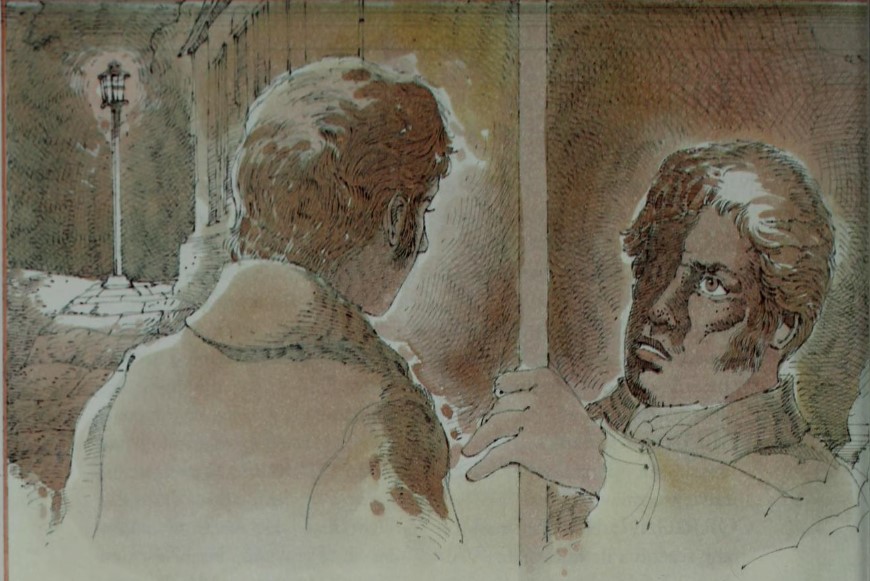
Illustrated by José Reyes 


"Stoke the fire, mull some wine, and usher in the Christmas season the way the Victorians did, with this classic haunted-house tale by a master of the form."

-Two medical students move in to an old home in Dublin and are immediately beset by the vengeful ghost of the "Hanging Judge" who mysteriously died in the home some years before. 

-This 1853 tale will strike readers as a typical haunted house tale, related in a straight-forward way with all the hallmarks of the genre. The two students are harassed in a series of encounters with the "Hanging Judge" during the late hours of the night between sleeping and wakefulness. After independently suffering for a time, the students come together with twin tales of ghostly encounters and decide to immediately leave. It is suggested that the haunting continues as the narrator relates the misfortunes of those who later took up residency in the home. This tale was reworked for LeFanu's 1872 story, "Mr. Justice Harbottle," which itself inspired Bram Stoker's 1891 tale, "The Judge's House."

-"An Account of Some Strange Disturbances in Aungier Street" was first published in Dublin University Magazine (Dec, 1853). It was not collected until M.R. James, perhaps the master of the English ghost story, compiled the posthumous volume, Madam Crowl's Ghost and Other Tales of Mystery (1923). Montague Summers included the tale in The Supernatural Omnibus (1931), and it has been reprinted a number of times in ghostly-themed anthologies. 

--"Of Sleds and Forty Winters" by Vic Johnson

Illustrated by E.T. (Broeck) Steadman

"A tale of age and everlasting youth, of the timelessness of newly fallen snow."

-A father takes his son sledding near the father's boyhood home and experiences a disorienting slippage in time. 

-This will be an engaging tale for TZ fans for no other reason than it resembles so many TZ stories about age and youthfulness, of going back in time, and the ways in which memory and nostalgia can capture the mind. In this way it will recall for the reader such TZ episodes as "Walking Distance," "Static," and "Kick the Can," all of which concern themselves with people who have passed the age of youthfulness and long to return to the simpler time of their younger days. The story is really a vignette and so must achieve in atmosphere what it lacks the length to achieve in narrative force. The story generally succeeds in doing so, including an unnerving sequence in which the father seems to lose memory of his adult life for a few moments before his young son can pull him back into the here and now. The story has not been reprinted since its appearance in TZ and Vic Johnson seems to have begun and ended his SF writing with the tale. 

--"The Autumn Visitors" by Frank Belknap Long 

Illustrated by Chris Pelletiere

"A brand new tale of love and transcendence by the subject of this month's TZ interview."

-An aging couple encounter interdimensional beings while secluded at their beachfront home after the summer tourists have departed. 

-This is an interesting and, one feels, a personal tale from the veteran writer though it is not as moving as Long intended it to be. The setup is fascinating: the narrator's wife discovers a piece of driftwood shaped like a child's doll and brings it back to their beach house. Later in the night the narrator is awakened to small sounds in the house and encounters a beautiful girl child reaching for the driftwood doll kept on a high mantle. The child flees and is bodily taken away down the beach by two adult figures. In the story's most jarring moment, Long stops a chase sequence to demonstrate the telepathic abilities of the strange visitors, whose physical touch can incinerate flesh, as the narrator finds out when he witnesses his dog incinerated. The story ends with unconvincing hopefulness in which the narrator and his wife are inspired by their encounter with the "others" to try and have a child of their own.

-"The Autumn Visitors" was collected in the huge retrospective volume, Masters of the Weird Tale: Frank Belknap Long (Centipede Press, 2010), which includes an introduction by Long's fellow contributor to this issue of TZ, Connie Willis. 

--"Final Version" by John Morressy

Illustrated by Nicola Cuti

"God help us, it's another Adam-and-Eve story - and at long last, one that makes sense!"

-A man and woman defiantly confront their creator over the eating of forbidden fruit. 

-As the heading indicates, Adam-and-Eve tales are groan-inducing among SF readers. The Twilight Zone committed itself to a dreadful example of the story type with the fifth season episode, "Probe 7 - Over and Out." Morressy takes a crack at the cliché and generally comes out on top with this fable-like vignette concerning the archetypal Adam and Eve (unnamed in the story) who eat of the forbidden fruit and then refuse to bow before the wrath of their creator over the nonsensical (and unjust) situation of tempting for no other cause than to elicit slavish devotion in return. The story also plays into the larger subgenre of religious SF which was very much in vogue at the time this story appeared as compared to its relative scarcity today. "Final Version" was reprinted in 100 Great Fantasy Short Short Stories, ed Martin H. Greenberg, Isaac Asimov, & Terry Carr (Doubleday, 1984).

--Show-by-Show Guide: TV's Twilight Zone: Part Ten by Marc Scott Zicree

-Zicree, author of The Twilight Zone Companion, which recently saw release of an expanded 3rd edition, returns with his episode guide to the original series. Zicree covers the following episodes in this installment, all of which we have covered here in the Vortex: "A Piano in the House," "To Serve Man," "The Last Rites of Jeff Myrtlebank," "The Fugitive," "Little Girl Lost," "Person or Persons Unknown," & "The Gift." 

--TZ Classic Teleplay: "The Night of the Meek" by Rod Serling

Illustrated with publicity stills from the episode.

-Here is the original teleplay of the fan-favorite holiday episode from series creator Rod Serling. You can read Brian's review here.

--Looking Ahead: In February's TZ

-Next month we have Robert Sheckley's first installment as the books reviewer, Gahan Wilson's reviews of the films Polyester and Strange Behavior, and a new column on music by Jack Sullivan. We'll be looking at stories by Charles L. Grant, Richard Christian Matheson, Gardner Dozois & Jack Dann, George Alec Effinger, and others. Filmmaker Wes Craven is the interview subject, James Verniere previews Craven's film Swamp Thing, and Stephen DiLauro & Don Hamerman look at "The Gargoyles of Gotham." The issue is rounded out by Marc Scott Zicree's continuing guide to the original series and Rod Serling's classic TZ teleplay for "A Stop at Willoughby." See you next time!

-JP

Tuesday, August 28, 2018

The Vortex Art Gallery

Cover illustration by Bob Lizarrage
for Famous Monsters of Filmland #259 (Jan/Feb, 2012)

Welcome to the Vortex Art Gallery, a repository for artworks related to Rod Serling, The Twilight Zone, and Rod Serling’s Night Gallery. 

The first portion of the gallery is a miscellany of artworks related to Rod Serling and The Twilight Zone. Beyond this, the gallery is divided into three sections: The Twilight Zone (original series), Rod Serling’s Night Gallery, and The Twilight Zone revival series. Descriptions are placed above the illustrations. For select images of Twilight Zone related book covers and detailed publication information for Twilight Zone related books, visit The Vortex Library.

Rod Serling's Night Gallery featured artworks created by Jaroslav Gebr, Thomas J. Wright, and Phil Vanderlei to accompany segments of the pilot film and the main series. That art can be viewed in the deluxe illustrated book published in 2020 by Creature Features titled Rod Serling's Night Gallery: The Art of Darkness, authored by Scott Skelton and Jim Benson, authors of Rod Serling's Night Gallery: An After-Hours Tour. It comes highly recommended. 

A note on fair use: The artworks displayed here are for archival and research purposes only. Images are copyright of their respective owners. 

-JP

Rod Serling's The Twilight Zone and Rod Serling's Twilight Zone Revisited
Illustrations by Earl E. Mayan 

These two hardcover collections were published in 1963 and 1964, respectively, by Grosset & Dunlap (New York). The books were produced for the young adult market with stories written by Walter B. Gibson, noted pulp author of The Shadow. The books followed immediately behind Rod Serling's three paperback collections of prose adaptations of his Twilight Zone stories published by Bantam Books (1960-1962). Most of the stories in these two hardcover books were original to the books but Gibson also adapted several of Rod Serling's Twilight Zone episodes which had not been adapted by Serling himself in the Bantam paperbacks. These adaptations included "Back There" and "Judgment Night," in Rod Serling's The Twilight Zone, and "The Purple Testament," "Beyond the Rim," "The 16-Millimeter Shrine," "The Man in the Bottle," and "The Mirror Image" in Rod Serling's Twilight Zone Revisited.  

The highlight of the books, besides the entertaining stories themselves, were the illustrations for both volumes produced by prolific mid-century illustrator Earl E. Mayan, who also produced illustrations for similar volumes such as Alfred Hitchcock's Monster Museum (1965). Mayan's covers, endpapers, and illustrations for both volumes are presented below along with the titles of the stories they illustrated. 


The endpapers contain an image of author Walter B. Gibson

"The Ghost of Ticonderoga" 

"Back There," adapted from Rod Serling's second season episode of The Twilight Zone

"The Ghost-Town Ghost"

"Judgment Night," adapted from Rod Serling's first season Twilight Zone episode 

"The Curse of Seven Towers"

"The Tiger God"

"The Avenging Ghost"

"Return from Oblivion"

"The House on the Square"

"Death's Masquerade"

"The Riddle of the Crypt"

"Dead Man's Chest"

"The Thirteenth Story"


Endpapers

"Two Live Ghosts"

"The Edge of Doom"

"The Fiery Spell"

"The Ghost of the Dixie Belle"

"The Purple Testament," based on Rod Serling's first season episode of The Twilight Zone

"The Ghost Train"

"Beyond the Rim," based on Rod Serling's Twilight Zone episode "A Hundred Yards Over the Rim"

"The 16-Millimeter Shrine," based on Rod Serling's first season episode of The Twilight Zone

"The Ghost of Jolly Roger"

"The House on the Island"

"The Man in the Bottle," based on Rod Serling's second season episode of The Twilight Zone 

"The Mirror Image," based on Rod Serling's first season episode of The Twilight Zone

"The Man Who Dropped By" 


The Cortlandt Hull Paintings

Cortlandt Hull, best-known as the creator of the Witch's Dungeon Classic Movie Museum in Connecticut, also restores amusement park attractions with fellow artist Bill Finkenstein. The two artists set their sights on restoring the carousel, originally built in 1925, located in the pavilion at George F. Johnson Recreational Park in Rod Serling's hometown of Binghamton, New York. This carousel, a fixture of Serling's childhood, was recreated on The Twilight Zone in the Serling-scripted first season episode, "Walking Distance." Hull and Finkenstein restored the George F. Johnson Recreational Park Carousel to closely resemble the carousel featured in "Walking Distance." In addition, Hull painted the running boards of the carousel with striking images depicting memorable moments from The Twilight Zone, including a tribute to "Walking Distance." 


Illustration by Marcus Hamilton for a special Rod Serling and The Twilight Zone section of Starlog #15 (August, 1978). Note the use of an early version of Serling's first season narration. 


Illustrations by Kevin Brockschmidt for "Driving Rod Serling," a memoir by Robert R. Rees featured in issue #203 of Starlog (June, 1994). 


Advertisement for the The Twilight Zone CBS Video Library, circa 1988; artist unknown.


Original illustration by Harley Brown for the cover of FilmFax #119 (2008), which featured an interview with Del Reisman, an associate producer on The Twilight Zone. 


Magazine advertisement circa 1972 for prints of the paintings featured on Rod Serling's Night Gallery. 


U.S. postage stamp designed by Carl T. Herrman and released in August of 2009 as part of the Early TV Memories commemorative stamps set. 


Illustration by Shag (Josh Agle). 


Scholastic Scope Magazine:
Scholastic Scope is a classroom magazine published by Scholastic Books that is focused on introducing students to great works of literature. The featured works were often adapted or abridged for younger readers. The publication has several times featured the work of Rod Serling, along with issues devoted to other writers of interest such as Ray Bradbury and Richard Matheson. 

Some issues of the magazine are scanned on microfilm and available to view at the Internet Archive, from which these images are shared. The most interesting issue is a special Rod Serling's The Twilight Zone issue for March 22, 1979, featuring a cover and interior illustrations by Lance R. Miyamoto for The Twilight Zone episodes "The Midnight Sun," "The Big Tall Wish," and "Back There."


An earlier issue of the magazine, for Dec 2, 1975, featured Rod Serling's "The Different Ones," which was dramatized for the second season of Night Gallery on Dec 29, 1971. Illustrations by John Cayea. 


The issue for Jan 20, 1977 featured Rod Serling's "The Rack," which was dramatized on The United States Steel Hour on April 12, 1955. Illustrations by Frances Jetter. 


The issue for April 17, 1980 featured Rod Serling's teleplay "I Shot an Arrow Into the Air," which Serling wrote based on an idea by Madelon Champion. It was dramatized for the first season of The Twilight Zone, originally broadcast Jan 15, 1960. Illustrations by Chris Spollen. 


Uncredited illustrations for Rod Serling's "Noon on Doomsday" (Sightlines: Seven Dramatic Experiences, ed. David Perlman, Masha Buell (Irwin Publishing, 1990)). "Noon on Doomsday" was produced for The United States Steel Hour for April, 25, 1956. Several Twilight Zone performers appeared in the drama, including Philip Abbott, Frank Overton, Albert Salmi, Everett Sloane, Edgar Stehli, and Jack Warden. "Noon on Doomsday" was also produced for Armchair Theatre for July 6, 1958. 


Charles Beaumont: Selected Stories

In 1988 Dark Harvest published Charles Beaumont: Selected Stories, edited by Roger Anker. The book, which won the Bram Stoker Award and was nominated for the World Fantasy Award, was a selection of Beaumont's best stories, as well as some unpublished stories, along with essays from Beaumont's friends and associates. Included in the volume were stories Beaumont adapted for The Twilight Zone. Also included were illustrations for the stories by Peter Scanlan. Shared below are Scanlan's illustrations for Beaumont's Twilight Zone stories "The Howling Man" and "The Jungle." Also included in the volume, but not illustrated, were Beaumont's Twilight Zone stories "The Devil, You Say?" (adapted as "Printer's Devil"), "Song for a Lady" (adapted as "Passage on the Lady Anne"), "Perchance to Dream," and "Gentlemen, Be Seated," which Beaumont adapted for the series but which was left unproduced.


The Twilight Zone (1959-1964): 

Illustration by Kunte Kvistad for "The Lonely" by Rod Serling (Something Strange, ed. Marjorie B. Smiley, Domenica Paterno, Mary Delores Jarmon (Macmillan Gateway English, 1969)). "The Lonely" was the seventh episode of the first season, directed by Jack Smight, starring Jack Warden, John Dehner, and Jean Marsh, broadcast November 13, 1959. 


Illustration by Carl Koch for "Perchance to Dream” by Charles Beaumont (Playboy, Oct, 1958). Beaumont adapted his story for the first season episode directed by Robert Florey, starring Richard Conte, John Larch, and Suzanne Lloyd, broadcast Nov 27, 1959.


Illustrations by “Williams” for “What You Need” by Lewis Padgett (Henry Kuttner & C.L. Moore) (Astounding Science Fiction, October, 1945). The story was first adapted for television in 1952 for Tales of Tomorrow and later adapted on The Twilight Zone by Rod Serling, directed by Alvin Ganzer, broadcast Dec 25, 1959.


Two views of "Third From the Sun" by Richard Matheson. Illustration by Paul Callé (Galaxy Science Fiction, Oct, 1950). Illustrations by Steve Moore for Adventure and Suspense, ed. Michael Spring (1987). The story was adapted by Rod Serling for the first season episode directed by Richard L. Bare, starring Fritz Weaver and Edward Andrews, broadcast Jan 8, 1960.


Illustrations by Stan Olson for "I Shot an Arrow Into the Air" by Rod Serling (Starwalk: New Dimensions in Reading (Silver Burdett Ginn, 1993)). Serling's teleplay was based on an idea by Madelon Champion and produced for the first season episode directed by Stuart Rosenberg, broadcast January 15, 1960.  


Three views of "The Hitch-Hiker" by Lucille Fletcher. Illustration by Xavier Esqueda for Something Strange, ed. Marjorie B. Smiley, Domenica Paterno, and Mary Delores Jarmon (Macmillan Gateway English, 1969). Illustration by Mike Eagle for McDougal, Littell Literature: Green Level (1982). Illustrations by Douglas Snow from Adventures for Readers: Book Two (Harcourt Brace Jovanovich, 1985). Rod Serling adapted Fletcher's 1941 radio play for the first season episode starring Inger Stevens, directed by Alvin Ganzer, broadcast January 22, 1960. 


W.E. Terry’s illustration for “Elegy” by Charles Beaumont, from the February, 1953 issue of Imagination. “Elegy” was adapted by Beaumont for the first season episode directed by Douglas Heyes, broadcast Feb 19, 1960.


Eight views of "The Monsters Are Due on Maple Street" by Rod Serling:
 
1.) Photographic illustrations by Charles Rotkin and Marion Bernstein for Unknown Worlds (Holt’s Impact, 1969)
2.) Illustrations by Charles Robinson from Great Waves Breaking (Holt, Rinehart and Winston, 1977). 
3.) Illustration by George Hamblin for Senses (The Signal Series) (Scott, Foresman and Co., 1977)
4.) Illustrations by Joseph Warner for Focus on Literature: Action (Houghton Mifflin, 1978)
5.) Uncredited illustrations for Purpose in Literature (Scott, Foresman and Co., 1982)
6.) Illustrations by Charles Reid for Worlds Beyond (Silver Burdett Ginn, 1993)
7.) Illustrations by John Nickle for Signatures: Hidden Treasures (Harcourt Brace, 1997)
8.) Illustrations by Mark Riedy for Literature and Language Arts (Holt, Rinehart, and Winston, 2003). 

The first season episode was directed by Ronald Winston and broadcast on March 4, 1960.

1.


2.


3.


4.


5.


6.


7.


8.


Illustration by Leo Summers for “Brothers Beyond the Void” by Paul W. Fairman (Fantastic Adventures, March, 1952). The story was adapted by Rod Serling, as “People Are Alike All Over,” for the first season episode directed by Mitchell Leisen, broadcast March 25, 1960.


Four views of Truman Capote's 1945 story "Miriam." Illustration by David Stone from the Fall, 1952 issue of Fantastic. Illustration by Hal Frenck for Encounters: Themes and Writers Series (McGraw-Hill, 1973). Illustration by Leo & Diane Dillon from the 1982 Reader's Digest anthology Great Short Tales of Mystery and Terror. Illustrations by Martin Salisbury for Supernatural Stories, edited by William Mayne (1995). Capote's story inspired Rod Serling's first season episode "Nightmare as a Child," directed by Alvin Ganzer, broadcast April 29, 1960. 


Two views of "The Chaser" by John Collier. Illustration by Charles Molina for Tales of Mystery and the Unknown (1976). Illustration by Meryl Henderson for Tales of Mystery and Suspense, edited by Theodore W. Hipple (Allyn and Bacon, 1977). The story was adapted for the first season of The Twilight Zone by writer Robert Presnell, Jr., directed by Douglas Heyes, broadcast May 13, 1960.


Illustration by David Klein for “And Now I’m Waiting” by Richard Matheson (Rod Serling’s The Twilight Zone Magazine, March/April, 1983). The story is Matheson’s original treatment for the first season episode “A World of His Own,” starring Keenan Wynn, directed by Ralph Nelson, broadcast July 1, 1960.


Cover illustration by Kelly Forbes for Fangoria #301 (March, 2011), depicting the devil-headed fortune-telling machine from Richard Matheson's second season episode, "Nick of Time." The episode starred William Shatner and Patricia Breslin, directed by Richard L. Bare, broadcast November 18, 1960. 


Three views of "Back There" by Rod Serling. Illustrations by Jim Cummins for
Journeys: Cascade (Harcourt Brace Jovanovich, 1982). Illustrations by Mike Eagle for A Road to Travel (Silver, Burdett & Ginn, 1985). Illustrations by Hal Frenck for Literature, ed. Tom Wolpert, Lee Bennett Hopkins (Random House, 1986). The teleplay was produced for the second season of The Twilight Zone, broadcast Jan 13, 1961.


Cover illustration by Eppo Doeve (as by J.F. Doeve), illustrating the second season Twilight Zone episode “The Whole Truth” for a 1966 Dutch edition of Rod Serling’s Stories from The Twilight Zone. The title translates as: Stories from the Dusk.  


Three cover illustrations inspired by Rod Serling’s second season episode “The Odyssey of Flight 33.” More Stories from the Twilight Zone (Bantam Books, 1969 & 1982) artists unknown. Urania #1151 (1991), an Italian reprint, with a cover by Vicente Segrelles.


Four views of Anton Chekhov's 1889 story "The Bet," which inspired Rod Serling's second season Twilight Zone episode "The Silence," broadcast April 28, 1961. Illustration by Karin Kretshmann (Stories of Surprise and Wonder, ed. Robert R. Potter, 1979). Illustrations by Alice Abramowitz (Gateway to Mystery Stories, ed. Elayne Sidley, 1978). Illustrations by Phero Thomas for Adventures in Appreciation (Harcourt Brace Jovanovich, 1985). Illustrations by Don Schlegel for The World Anthology (Globe, 1987).  


A bizarre illustration by "Remington" for “Traumerei” by Charles Beaumont (Infinity Science Fiction, Feb, 1956). The story was adapted by Beaumont, as “Shadow Play,” for the second season episode starring Dennis Weaver, directed by John Brahm, broadcast May 5, 1961.


Illustrations by Kim Zimmerman for “Will the Real Martian Please Stand Up?” by Rod Serling, from the publication of Serling’s teleplay in the Feb, 1986 issue of Rod Serling’s The Twilight Zone Magazine. The episode was directed by Montgomery Pittman and originally aired on May 26, 1961. 


Illustrations by Gerard Quinn for “It’s a Good Life” by Jerome Bixby, from its first UK appearance in Science Fantasy, v 6, #16 (1955). The story was adapted by Rod Serling for the third season episode directed by James Sheldon, broadcast Nov 3, 1961.


Two views of "The Valley Was Still" by Manly Wade Wellman, adapted as "Still Valley" by Rod Serling for the third season episode directed by James Sheldon, broadcast Nov 24, 1961. Illustration by Harry Ferman (Weird Tales, Aug, 1939). Illustration by Lee Brown Coye for Worse Things Waiting (Carcosa, 1973).


Illustrations by Leo Summers for “The Jungle” by Charles Beaumont (IF, Dec, 1954). Beaumont adapted his story for the 3rd season episode directed by William Claxton, starring John Dehner, broadcast December 1, 1961.


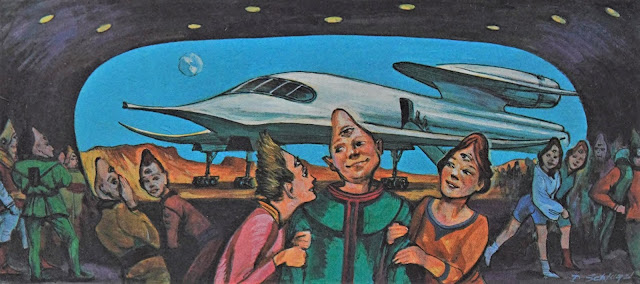
Eight views of “To Serve Man” by Damon Knight, adapted by Rod Serling for the third season of The Twilight Zone, directed by Richard L. Bare, broadcast March 2, 1962. Illustration by David Stone (Galaxy Science Fiction, Nov, 1950). Illustrations by David Kingham from To See Ourselves (Holt, Rinehart and Winston, 1977). Cover illustration for The Best of Damon Knight by Richard Corben (1976). Cover illustration for The Best of Damon Knight by Carl Lundgren (1980). Cover illustration by Tommy Soloski for Galaxy science fiction anthology (1980). Illustrations by Tom Leonard for Scope English Anthology (Scholastic, 1988). Illustration by John Pierard for Bruce Coville's Book of Aliens (Scholastic, 1994). Illustration by David Wyatt from The Young Oxford Book of Aliens, ed. Dennis Pepper (1998).  


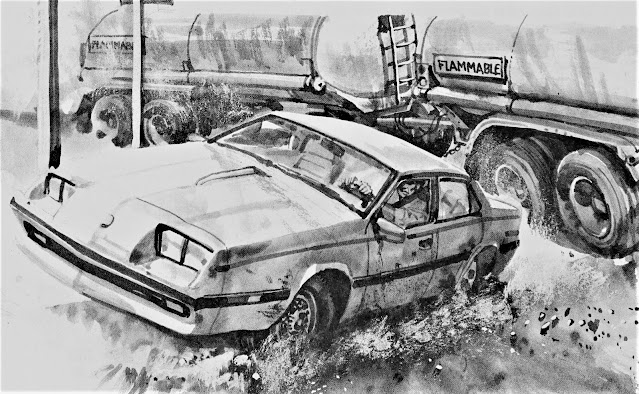
Illustration by Ray Houlihan for “Little Girl Lost” by Richard Matheson (Amazing Stories, Oct/Nov, 1953). The story was adapted by Matheson for the third season episode starring Robert Sampson & Charles Aidman, directed by Paul Stewart, broadcast March 16, 1962.


Illustrations by Jim Harter for “The Changing of the Guard” by Anne Serling, a prose adaptation of Rod Serling’s third season teleplay, from the Jan/Feb, 1985 issue of Rod Serling’s The Twilight Zone Magazine. The original episode was directed by Robert Ellis Miller, starring Donald Pleasence, broadcast June 1, 1962.


W.E. Terry’s illustration depicting a shocking moment in “The Man Who Made Himself” by Charles Beaumont (aka “In His Image”) (Imagination, Feb, 1957). Beaumont adapted the story for the fourth season episode directed by Perry Lafferty, broadcast Jan 3, 1963.


Illustration by Ed Emshwiller for “Death Ship” by Richard Matheson (Fantastic Story, March, 1953). Matheson adapted the story for the fourth season episode starring Jack Klugman & Ross Martin, directed by Don Medford, broadcast Feb 7, 1963.


Illustration by Enoch Sharpe for “The Devil You Say?” by Charles Beaumont (Amazing Stories, Jan, 1951). Beaumont adapted his story as “Printer’s Devil” for the fourth season episode directed by Ralph Senesky, starring Burgess Meredith, broadcast Feb 28, 1963. 


Illustrations by Frank Kramer for Malcolm Jameson’s “Blind Alley” (Unknown Worlds, June, 1943). The story was adapted by Rod Serling as “Of Late I Think of Cliffordville” for the fourth season, directed by David Lowell Rich, broadcast April 11, 1963.


Illustrations for Richard Matheson’s “Nightmare at 20,000 Feet” (1962), which Matheson adapted for the fifth season Twilight Zone episode starring William Shatner, directed by Richard Donner, broadcast October 11, 1963. Mysterious Air Stories (1986), cover artist unknown. Cover art by “Ravenwood” for Matheson’s 2002 collection Nightmare at 20,000 Feet (Tor Books). Illustration by Chris Roberts for Rue Morgue #35 (Sept/Oct, 2003). Illustration by Rick Melton for The Dark Side #181 (2017). 


Illustration by David Christiana for the Dec, 1982 issue of Rod Serling’s The Twilight Zone Magazine which contained the first publication of Jerry Sohl’s fifth season teleplay “Living Doll,” at this time credited solely to Charles Beaumont. The episode featured Telly Salavas directed by Richard C. Sarafian, broadcast Nov 1, 1963.


Two views of Charles Beaumont's "The Beautiful People" (aka "The Beautiful Woman"). Illustration by Bob Martin for the Sept, 1952 issue of IF, and illustration by Gerard Quinn for Nebula Science Fiction #3 (1953). The story was adapted by John Tomerlin as “Number 12 Looks Just Like You” for the fifth season episode starring Collin Wilcox, Suzy Parker, and Richard Long, directed by Abner Biberman. Originally broadcast Jan 24, 1964.


Two views of Richard Matheson's "Sorry, Right Number," aka "Long Distance Call." Illustration by Art Sussman for the original magazine publication (Beyond Fantasy Fiction, Nov, 1953). Illustration by Ivan Lapper for The Gruesome Book, ed. Ramsey Campbell (Piccolo, 1983), inspired by Barbara Stanwyck in the film Sorry, Wrong Number (1948). Matheson adapted his story as "Night Call" for the fifth season episode starring Gladys Cooper, directed by Jacques Tourneur, broadcast Feb 7, 1964.


Seven views of "An Occurrence at Owl Creek Bridge" by Ambrose Bierce (1890). Illustration by Lynd Ward for The Haunted Omnibus, ed. Alexander Laing (1937). Illustration by Paul Landacre from Tales of Soliders & Civilians (Heritage Press, 1971). Illustration by Hal Frenck for Encounters: Themes and Writers Series (McGraw-Hill, 1973). Illustration by Ferebe Streett from The Stories and Fables of Ambrose Bierce (1977). Uncredited illustration for Super Book of Ghost Stories, ed. Leonard J. Matthews (Hamlyn, 1977). Illustrations by C. Mitchell from United States in Literature (Scott, Foresman and Co., 1979). Illustrations by Donna J. Neary for Creative Education (1980). A 1962 Academy Award-winning French short film adaptation of the story was broadcast during The Twilight Zone's 5th season on Feb 28, 1964.


Two views of George Clayton Johnson’s “Sea Change,” first published in the Oct, 1981 issue of Rod Serling’s The Twilight Zone Magazine, with an illustration by Robert Morello. The story was reprinted in the first issue of Night Cry (1984) with an illustration by D.W. Miller. Clayton Johnson originally sold the story to The Twilight Zone during the second season but production on the episode was halted when the series sponsor was apprehensive about the grisly subject matter of the tale.


Illustrations from the June, 1982 issue of Rod Serling’s The Twilight Zone Magazine which accompanied the first publication of Richard Matheson's unproduced 5th season Twilight Zone teleplay "The Doll." Cover by Malcolm McNeill, interior art by Perry A. Realo. The script was later made into a 1st season episode of Steven Spielberg’s Amazing Stories starring John Lithgow, who won an Emmy Award for his performance, directed by Phil Joanou, broadcast May 4, 1986.


Tom O’Sullivan’s illustrations for Ray Bradbury’s “Here There Be Tygers” (1951) (Amazing Stories, Apr/May, 1953 (reprint)). Bradbury adapted the story for The Twilight Zone but it was never filmed. Bradbury later adapted the tale for The Ray Bradbury Theater, directed by John Laing, broadcast Nov 30, 1990.


Rod Serling’s Night Gallery (1969-1973)

Two views of Fritz Leiber's "The Dead Man." Illustration by Charles A. Kennedy from Weird Tales (Nov, 1950) & by R.W. Smethurst for a reprint in the April, 1958 issue of Phantom magazine. The story was adapted for the first episode of Rod Serling’s Night Gallery by writer/director Douglas Heyes, broadcast Dec 16, 1970. 


Illustrations by Edd Cartier for C.M. Kornbluth’s “The Little Black Bag” (Astounding SF, July, 1950). The story was adapted for the 1st season of Rod Serling’s Night Gallery by writer Rod Serling & director Jeannot Szwarc, broadcast Dec 23, 1970.


Illustration by Karin Kretshmann for “The House” by André Maurois (Stories of Surprise and Wonder, ed. Robert R. Potter, 1979). The story was adapted for Rod Serling’s Night Gallery by writer Rod Serling & director John Astin (Dec 30, 1970).


Four views of “The Shadows on the Wall” by Mary E. Wilkins Freeman. Illustrations by Peter Newell for Freeman's The Wind in the Rose Bush and Other Stories of the Supernatural (1903). Illustration by Lee Brown Coye for Who Knocks? ed. August Derleth (1946). Illustration by Barbara Kiwak for Classic Ghost Stories II (Lowell House, 1998). Illustration by Antoni Sobecki for a Polish edition of Freeman's Lost Ghosts (2006). The story was adapted, as “Certain Shadows on the Wall,” for Night Gallery by writer Rod Serling & director Jeff Corey (Dec 30, 1970). 


Illustration by Lawrence Mynott for "The Doll" by Algernon Blackwood (Tales from Beyond the Grave, Octopus Books, 1982). The story, first published in 1946, was adapted by Rod Serling for the first season of Night Gallery, directed by Rudi Dorn, broadcast January 13, 1971.


Three views of Margaret St. Clair's "The Boy Who Predicted Earthquakes." Illustration by W. Winter from the story's original publication in Maclean’s, June 15, 1950. Illustrations by Patric Fourshe from Diversity (Houghton Mifflin, 1974). Illustrations by Joe Van Severen from Children of the Future, 1984. The story was adapted for Night Gallery by Rod Serling & director John Badham, broadcast Sept 15, 1971.


Original illustrations by Paul Orban for A.E. van Vogt’s story “The Witch” (Unknown Worlds, Feb, 1943), adapted for Rod Serling’s Night Gallery as “Since Aunt Ada Came to Stay” by writer Alvin Sapinsley and director William Hale, originally broadcast Sept 29, 1971.


Illustration by Newton Alfred for Manly Wade Wellman’s “The Devil Is Not Mocked” (Unknown Worlds, June, 1943). The story was adapted for the second season of Rod Serling’s Night Gallery by writer/director Gene Kearney, originally broadcast Oct 27, 1971.


Illustration by Hannes Bok for Margaret St. Clair’s “Brenda” (Weird Tales, March, 1954). The story was adapted for the 2nd season of Rod Serling’s Night Gallery by writer Douglas Heyes & director Allen Reisner, broadcast Nov 2, 1971.


Illustration by Hugh Rankin for H.P. Lovecraft’s “Pickman’s Model” (Weird Tales, Oct, 1927). The story was adapted by writer Alvin Sapinsley & director Jack Laird for Rod Serling’s Night Gallery, broadcast Dec 1, 1971.


Two views of Alice-Mary Schnirring’s “The Dear Departed.” Illustration by A.R. Tilburne for Weird Tales, May, 1944, and illustration by Lee Brown Coye for Who Knocks? ed. August Derleth (1946). The story was adapted for the 2nd season of Rod Serling’s Night Gallery by writer Rod Serling & director Jeff Corey, broadcast Dec 1, 1971. 


Two views of H.P. Lovecraft's "Cool Air" (1928). Illustration by Harry Ferman for Weird Tales (Sept, 1939) & the final page of an adaptation by Bernie Wrightson for Creepy #62 (Jan, 1975). The story was adapted for Rod Serling’s Night Gallery by writer Rod Serling & director Jeannot Szwarc, broadcast Dec 8, 1971.


Four views of Rod Serling's "The Different Ones." Illustrations by John Cannizzo (Globe Literature, 1982). Illustrations by Don Schlegel for The Student's Anthology (Globe, 1986). Illustrations by Jim Ludtke for Adventure and Suspense, ed. Michael Spring (1987). Illustrations by Jon Friedman for Scope English Anthology (Scholastic, 1988). Serling’s teleplay was produced for the second season of Night Gallery, directed by John Meredyth Lucas, broadcast Dec 29, 1971.


Uncredited illustration for August Derleth's "Logoda's Heads" (Strange Stories, April, 1939). It was adapted for Rod Serling’s Night Gallery by writer Robert Bloch & director Jeannot Szwarc, broadcast Dec 29, 1971. 


Illustration by Russell Kirk for his 1952 story “Sorworth Place” (The Surly Sullen Bell, 1962). The story was adapted as “The Ghost of Sorworth Place” on Rod Serling’s Night Gallery by writer Alvin Sapinsley & director Ralph Senensky (Jan 19, 1972).


Illustration by Hugh Rankin for Hazel Heald’s (and H.P. Lovecraft’s) “Out of the Eons” (Weird Tales, April, 1935). It was adapted as “Last Rites for a Dead Druid” on Rod Serling’s Night Gallery by writer Alvin Sapinsley & director Jeannot Szwarc, broadcast Jan 26, 1972.


Uncredited illustration for Clark Ashton Smith’s “The Return of the Sorcerer” (Strange Tales of Mystery and Terror, Sept, 1931). It was adapted for Rod Serling’s Night Gallery by writer Halsted Welles & director Jeannot Szwarc, starring Vincent Price (Sept 24, 1972).


Illustration for Fritz Leiber’s “The Girl with the Hungry Eyes” (Avon, 1949); artist unknown. The story was adapted for the 3rd season of Rod Serling’s Night Gallery by writer Robert Malcolm Young & director John Badham, broadcast Oct 1, 1972. 


Illustration by Virgil Finlay for J. Wesley Rosenquest’s “The Secret of the Vault” (Weird Tales, May, 1938). It was adapted as “You Can Come Up Now, Mrs. Millikan” for Rod Serling’s Night Gallery by writer Rod Serling & director John Badham, broadcast Nov 12, 1972.


Illustration by Hugh Rankin for Everil Worrell’s “The Canal” (Weird Tales, Dec, 1927). The story was adapted as “Death on a Barge” for the 3rd season of Rod Serling’s Night Gallery by writer Halsted Welles & director Leonard Nimoy, broadcast March 4, 1973. 


The Twilight Zone (1985-1989)


Illustrations by John Storey for Harlan Ellison’s “Shatterday” (Science Fiction Monthly, Aug, 1975). The story was adapted for the first episode of The Twilight Zone revival series by writer Alan Brennert and director Wes Craven, broadcast Sept 27, 1985.


Three views of Henry Slesar's "Examination Day." Illustration by Leon Bishop for the February, 1958 issue of Playboy. Illustration by Charles Molina from Stories Beyond Time and Space, ed. Robert R. Potter, 1978. Illustration by Peter Horvath from Beware! R.L. Stine Picks His Favorite Scary Stories, 2002. The story was adapted for the revival Twilight Zone series by writer Philip DeGuere and director Paul Lynch, broadcast November 1, 1985. 


Two views of "A Message from Charity" by William M. Lee. Illustration by Alicia Austin for New Worlds of Fantasy #3, ed. Terry Carr (Ace Books, 1971). Illustration by Peter Farrow for Yankee Witches, ed. Charles G. Waugh, Martin H. Greenberg, and Frank D. McSherry, Jr. (1988). The story was originally published in the Nov, 1967 issue of The Magazine of Fantasy and Science Fiction. It was adapted for the first season of the revival Twilight Zone series by writer Alan Brennert and director Paul Lynch, broadcast Nov 1, 1985.


Illustration by Kent Bash for Harlan Ellison’s “Paladin of the Lost Hour” (Rod Serling’s The Twilight Zone Magazine, Dec, 1985). Ellison adapted the story for the revival Twilight Zone series, starring Danny Kaye, directed by Gilbert Cates, broadcast Nov 8, 1985.


Illustration by Douglas Chaffee for William F. Wu’s “Wong’s Lost and Found Emporium” (Amazing SF, May, 1983). The story was adapted for the revival Twilight Zone series by writer Alan Brennert & director Paul Lynch, broadcast Nov 22, 1985.


Illustration by John Giunta for Arthur C. Clarke’s “The Star" (Infinity Science Fiction, Nov, 1955). “The Star” was adapted for The Twilight Zone revival series by writer Alan Brennert and director Gerd Oswald. It starred Fritz Weaver and was originally broadcast Dec 20, 1985.


Illustrations by Edd Cartier for Theodore Sturgeon’s “Yesterday Was Monday” (Unknown Fantasy Fiction, June, 1941). The story was loosely adapted as “A Matter of Minutes” on the revival Twilight Zone series by writer Rockne S. O’Bannon & director Sheldon Larry, broadcast Jan 24, 1986.


Illustrations by Allen Koszowski for Stephen King’s “Gramma” (Weirdbook 19, Spring, 1984). The story was adapted for the revival Twilight Zone series by writer Harlan Ellison & director Bradford May, broadcast Feb 14, 1986.


Illustrations by Frank Borth for Roger Zelazny’s “The Last Defender of Camelot” (Asimov’s SF Adventure Magazine, Summer, 1979). The story was adapted for the revival Twilight Zone series by writer George R.R. Martin and director Jeannot Szwarc, originally broadcast April 11, 1986.


Illustration by Tom Beecham for Theodore Sturgeon’s “Saucer of Loneliness” (Galaxy SF, Feb, 1953). It was adapted under its original title, “A Saucer of Loneliness,” for the revival Twilight Zone series by writer David Gerrold and director John Hancock, broadcast Sept 27, 1986.


Illustration by Michael Wm. Kaluta for George R.R. Martin’s “The Road Less Traveled” (Dreamsongs volume II, 2007). Martin’s teleplay was dramatized on the revival Twilight Zone series by director Wes Craven, starring Cliff De Young, broadcast December 18, 1986.


 Illustration by Anna Rich for Parke Godwin’s “Influencing the Hell Out of Time and Teresa Golowitz” (Rod Serling’s The Twilight Zone Magazine, Jan, 1982). The story was adapted as “Time and Teresa Golowitz” for the second season of the revival Twilight Zone series by writer Alan Brennert and director Shelley Levinson, originally broadcast July 10, 1987.


Illustration by David Levinson for Alan Brennert’s “Voices in the Earth” (Rod Serling’s The Twilight Zone Magazine, Oct, 1987), from a prose adaptation of Brennert’s original teleplay which aired on the revival Twilight Zone series, directed by Curtis Harrington, broadcast July 10, 1987. 


Illustrations by Frank Kelly Freas for Tom Godwin’s “The Cold Equations” (Astounding SF, Aug, 1954). The story was adapted for the revival Twilight Zone series by writer Alan Brennert and director Martin Lavut, originally broadcast Jan 7, 1989.


Illustration by Neal Adams for Harlan Ellison’s “Crazy as a Soup Sandwich,” from NOW Comics The Twilight Zone #1 (1991). Ellison’s teleplay was filmed for the third season of the revival Twilight Zone, directed by Paul Lynch, broadcast April 1, 1989.


Illustrations by Trevor Irvin for Donald E. Westlake’s “Nackles” (Rod Serling's The Twilight Zone Magazine, Feb, 1987). The story was adapted for the revival Twilight Zone series by Harlan Ellison but never filmed due to network interference, which caused Ellison to resign his position as Creative Consultant for the series.


Bonus Illustrations:

Illustration by Jayem Wilcox for “The Return of Andrew Bentley” by August Derleth & Mark Schorer (Weird Tales, Sept, 1933). Richard Matheson adapted the story for the second season of Boris Karloff’s Thriller, broadcast Dec 11, 1961.


Illustration by E.T. (Broeck) Steadman for Donald Olson’s “The Tear Collector” (Rod Serling’s The Twilight Zone Magazine, Oct, 1981). The story was adapted for the 1st season Tales from the Darkside episode written by Geoffrey Loftus, directed by John Drimmer, broadcast Feb 24, 1985.


Illustration by Marty Blake for Haskell Barkin’s “All a Clone by the Telephone” (Rod Serling’s The Twilight Zone Magazine, Dec, 1981). Barkin adapted his story for the 1st season episode of Tales from the Darkside directed by Frank De Palma, broadcast Jan 20, 1985.


Illustration by J.K. Potter for Robert Bloch’s “The Chaney Legacy” (Night Cry, Fall, 1986). The story was adapted for the television anthology series Monsters by writer John Harrison (as John Sutherland) and director Jeffrey Wolf, broadcast Dec 3, 1988.


Illustrations by James Stonebraker for George Clayton Johnson’s story, “Your Three Minutes Are Up,” a moving tribute to Twilight Zone writer Charles Beaumont from the June, 1989 issue of Rod Serling’s The Twilight Zone Magazine. This was a Beaumont tribute issue and the final issue of the magazine.


Illustrations by Ted Burwell for “Duel” by Richard Matheson (The American Anthology, ed. Robert R. Potter (Globe, 1987)). The story was first published in 1971 and was adapted by Matheson that year for the television film directed by Steven Spielberg.